
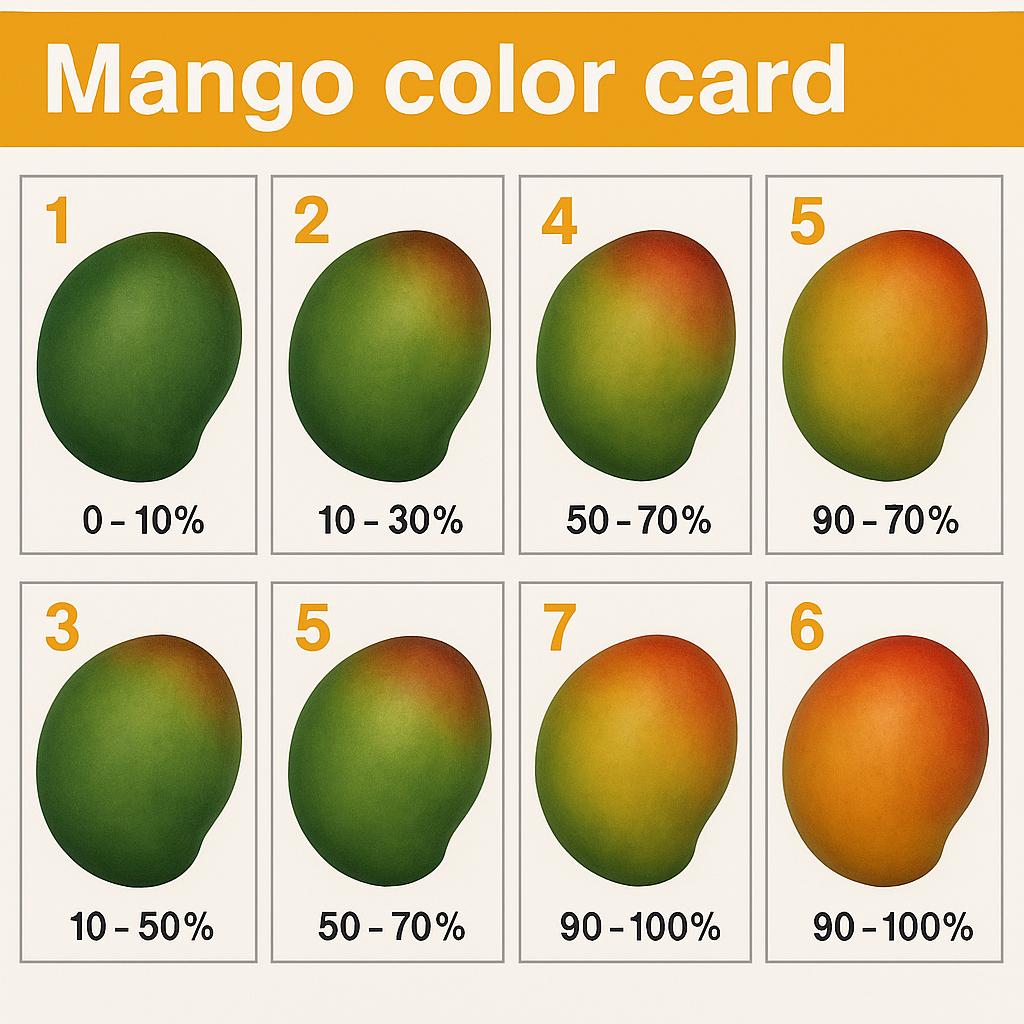
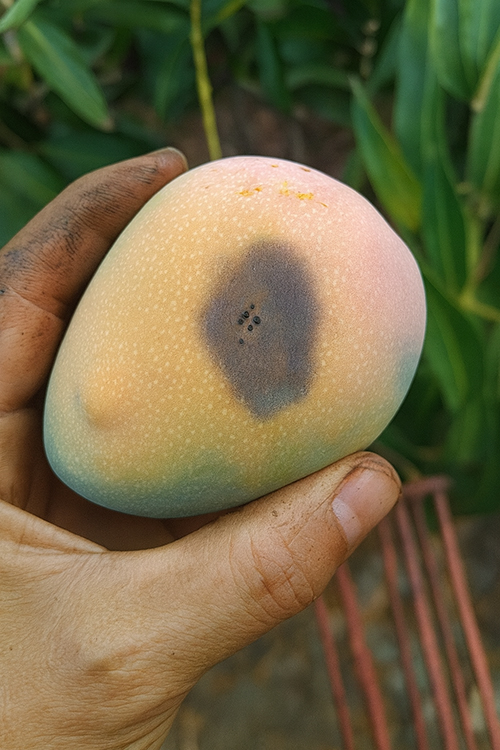
Mango growers in the Sea of Galilee region have long struggled with poor fruit color and inconsistent quality – challenges that directly reduce market value and profitability. Excessive nitrogen during fruit development was identified as a major contributor to physiological disorders such as jelly seed, soft nose, and brown spot, as well as to insufficient fruit coloration.
 | 
|
The Project
In 2023, Haifa’s agronomy and field teams set out to help local growers overcome these obstacles by designing precise, orchard-specific nutrition programs. Each plan was tailored to the crop’s phenological stages, with special emphasis on carefully controlled nitrogen levels – aimed at preventing excess while still supporting balanced vegetative and reproductive growth throughout the season.
The guiding principle was clear: right nutrition at the right time to improve both yield and fruit quality.
Suggested Fertilization Program
A stage-based program was implemented, using Haifa’s premium water-soluble fertilizers, to support flowering, fruit set, fruit development, and post-harvest recovery. Key elements included:
- Lower nitrogen inputs during fruit development to reduce physiological disorders.
- Balanced potassium nutrition to support fruit sizing and color.
- Calcium applications in orchards showing deficiency symptoms.
Growth stage | Product | Rate (kg/ha) | Nutrient units per ha |
|
Flowering | 50 | 6-22-6 | 1 | |
| Fruit set & early fruit growth | 125 | 29-9-29 | 2 | |
190 | 29-0-0+50CaO | 3 | ||
| Fruit grow & harvest | Haifa SOP™ | 200 | 0-0-102 | 2 |
250 | 0-0-128 | 3 | ||
| Post harvest | 125 | 29-9-29 | ||
| Total |
| 64-40-166/ |
1 Technical fertilization 2 In plots without calcium deficiencies 3 In plots with calcium deficiencies
Results
Fruit Color
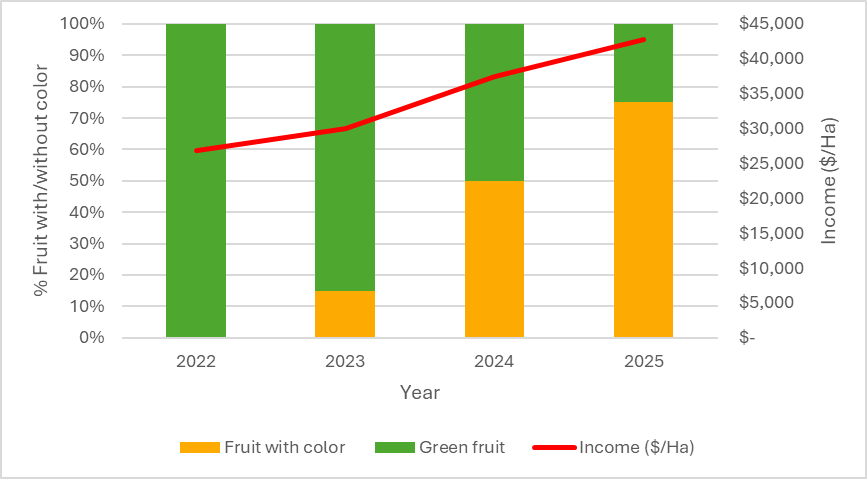
In 2022, 100% of ‘Keitt’ mangoes in the evaluated orchards remained green at harvest. In 2023, following the optimized program, the proportion of colored fruit increased dramatically – nearly doubling the growers’ income.
Fruit Quality
- Type B fruit decreased from 20% to 10%.
- Type A fruit – worth 3–4 times more – increased significantly, improving overall revenue.
These outcomes demonstrate that precise nutrition can directly influence commercial performance.
Conclusions
- Reducing nitrogen during key developmental stages improves fruit color and reduces physiological disorders.
- Lower nitrogen does not harm yield – on the contrary, it often enhances it.
- In calcium-deficient orchards, increased calcium fertilization is recommended, alongside evaluation of uptake barriers.
- Precision fertilization planning helps lower costs while improving quality.
Bottom line:
Through an optimized nutrition strategy, consistent field support, and close collaboration with growers, Haifa delivered measurable improvements in both fruit quality and grower profitability – reinforcing Haifa’s position as a leading provider of high-value plant nutrition solutions.
Report by Yotam Matalon, Haifa Agronomist in Israel