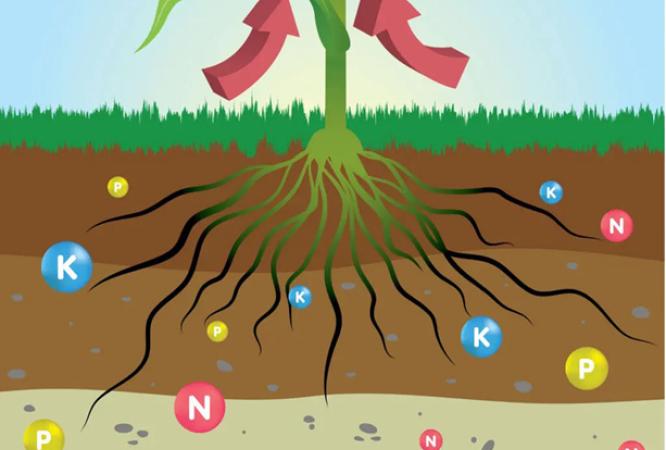

Micronutrient Definition and Feature
Micronutrients are essential plant nutrients required in very small quantities, yet they have a decisive influence on growth, physiology, and yield formation. Key micronutrients include the metallic elements iron (Fe), zinc (Zn), manganese (Mn), and copper (Cu), as well as the non-metallic elements boron (B) and molybdenum (Mo). While some elements naturally occur in soils at sufficient or even excessive levels – such as chloride, which may become harmful if added through fertilizers – others must be carefully managed to ensure adequate plant availability throughout the entire growing season.
Despite their low required concentrations, micronutrients play vital roles in photosynthesis, enzyme activation, nutrient transport, reproductive development, and plant resilience. Because even slight deficiencies can reduce yields, impair quality, and weaken stress tolerance, thoughtful micronutrient management is a cornerstone of successful and sustainable crop production.
Common Causes of Micronutrient Deficiencies
- Low Soil Nutrient Levels: Naturally poor soils or depletion due to intensive cropping.
- Poor Aeration: Waterlogging or compaction reduces oxygen availability and root activity.
- Extreme Soil pH: High or low pH can lock nutrients, making them unavailable for uptake.
- Nutrient Antagonism: Excessive supply of one nutrient may block the uptake of others.
- Impaired Root Function: Stress or unfavorable conditions reduce nutrient absorption.
Best Practices for Micronutrient Management
Fulfill Plant Requirements
Just as a fertilization program addresses crop needs for nitrogen, phosphorus, and potassium, it must also meet micronutrient requirements. Supply should be suited to the overall growing conditions and the targeted yield.
Keep the Right Balance
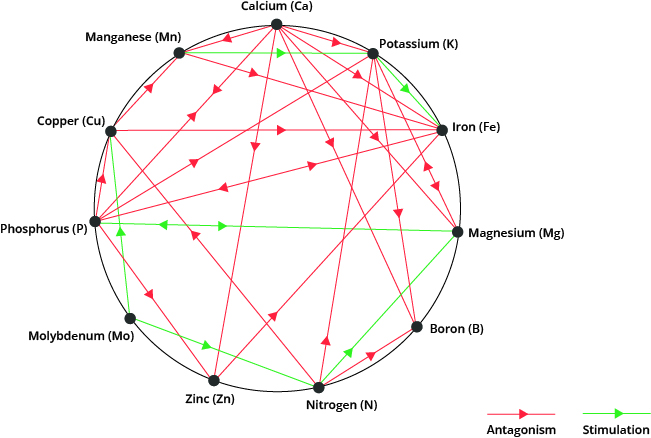
Plant nutrients may compete for absorption or interfere with one another. An excess of one nutrient – even if not harmful on its own – can hinder uptake of another essential element. To prevent antagonism, the fertilization program must maintain an optimal nutrient balance aligned with plant needs.
Mulder’s diagram (below) shows the mutual effects of different plant nutrients. For example, it shows that excessive supply of copper may disturb iron uptake. On the other hand, molybdenum facilitates uptake of copper.
Assure Timely Application
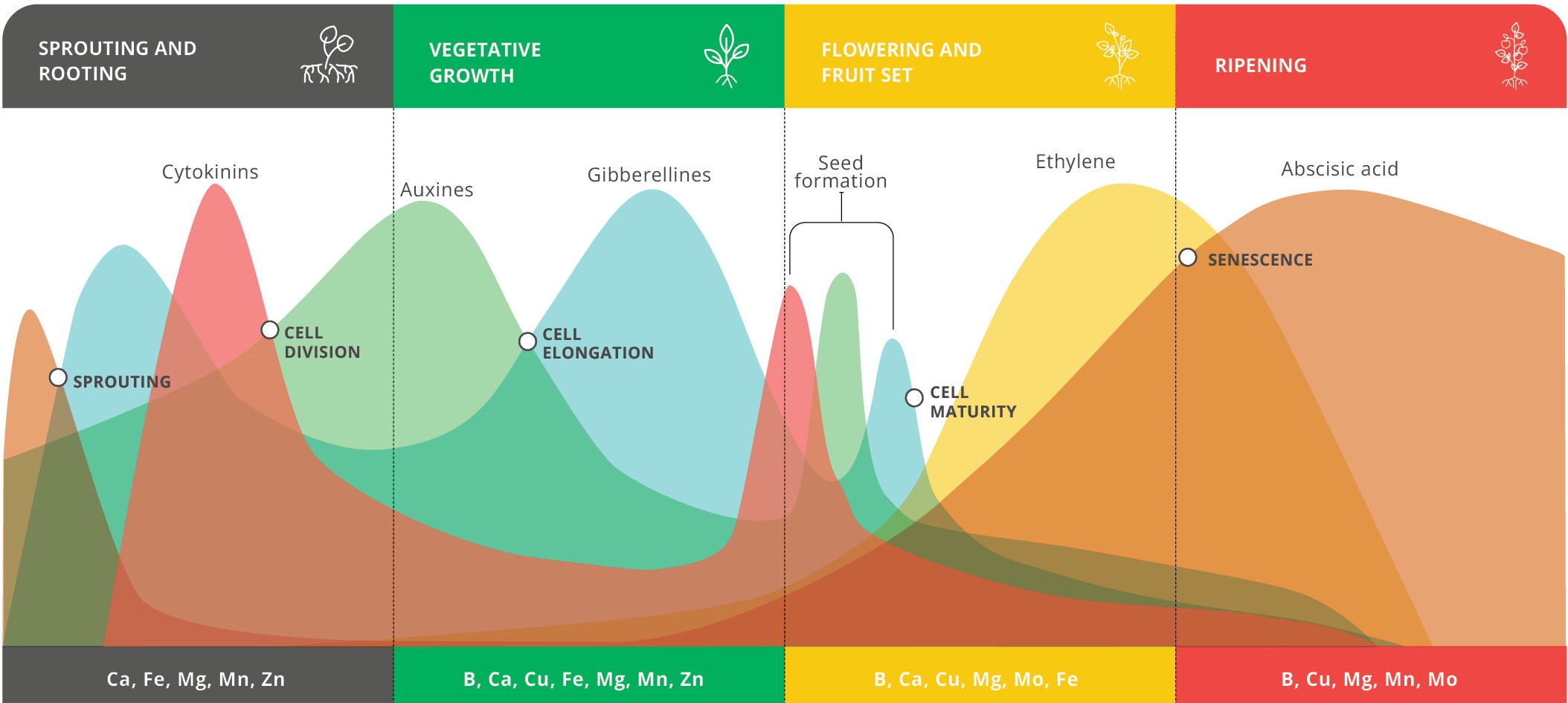
Each growth phase involves distinct physiological processes that require specific micronutrient combinations. Supply should follow plant developmental dynamics to support growth, productivity, and quality throughout the season.
Detect Plant Plant Deficiencies
Plant deficiencies can significantly affect yield long before symptoms appear. Continuous monitoring helps detect insufficient supply in time for corrective action. Micronutrient status assessment includes:
- Field Survey: Evaluate plant vigor, uniformity, and soil conditions (moisture, drainage, aeration).
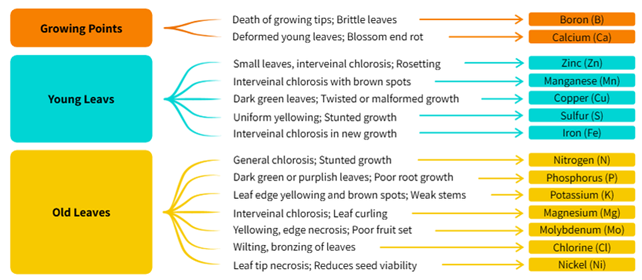
- Visual Indicators: Identify chlorosis, necrosis, stunted growth, or abnormal leaf patterns (see chart below).
- Symptom Location: Deficiency symptoms on older vs. younger leaves indicate specific nutrient shortages.
- Diagnostics: Use decision flow charts and confirm with soil or tissue analysis.
Understanding common visual cues supports early detection and targeted correction.
Ensuring Proper Micronutrient Supply
Form of Fertilizers
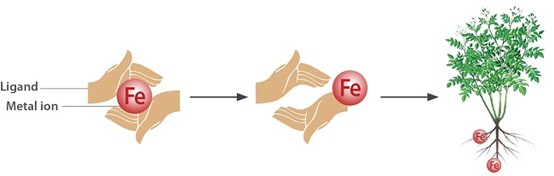
Micronutrients can be supplied as soluble salts (typically sulfates) or as chelates. Chelated forms protect micronutrients from precipitation, improving their availability for plant uptake. The Haifa Micro™ range provides chelated micronutrients for Nutrigation™ (fertigation) and foliar application, ensuring solubility and availability even in challenging soils.
Foliar Application
Foliar feeding provides fast, on-the-spot nutrition and is an effective supplement to soil fertilization, especially for correcting deficiencies. Applying micronutrients at key growth stages boosts yields and enhances quality. Haifa’s Poly-Feed™ Foliar formulas are enriched with micronutrient compositions tailored to crop and growth-stage demands.
Integrate Micronutrients into Fertilization Programs
Balanced fertilization programs must include micronutrients in the correct ratios.
- NutriNet™: Provides tailored fertilization plans with recommended microelement rates. Try it!
- Poly-Feed™: Complete NPK fertilizers enriched with chelated micronutrients for optimal nutrient balance and easy application.
- Custom Mixes: For growers preparing their own blends, Haifa’s chelated micronutrient products ensure compatibility and minimize antagonism.
Application Tips
- Use fully soluble fertilizers for fertigation and foliar spraying.
- For severe deficiencies or poor root uptake, prefer foliar feeding for rapid correction.
- Maintain irrigation water within recommended pH ranges (6.0–7.5 depending on chelate type) to ensure optimal availability.
Key Takeaways
- Prevention is best: Monitor crops regularly and follow balanced fertilization programs.
- Use decision-support tools: Platforms like NutriNet™ help tailor micronutrient management to crop needs.
- Choose the right products: Use chelated forms for soil application and specialized foliar products when needed.
- Maintain water pH: Keep irrigation water within the optimal 6.0–7.5 range for best nutrient availability.
Proactive micronutrient management promotes healthy, resilient plants, higher yields, and more sustainable farming.