

Haifa Group's CEO Motti Levin shares insights about the ongoing shift in the fertilizer industry in general, and in particular in light of current geopolitical developments and tensions in the Arab Gulf and the Strait of Hormuz:
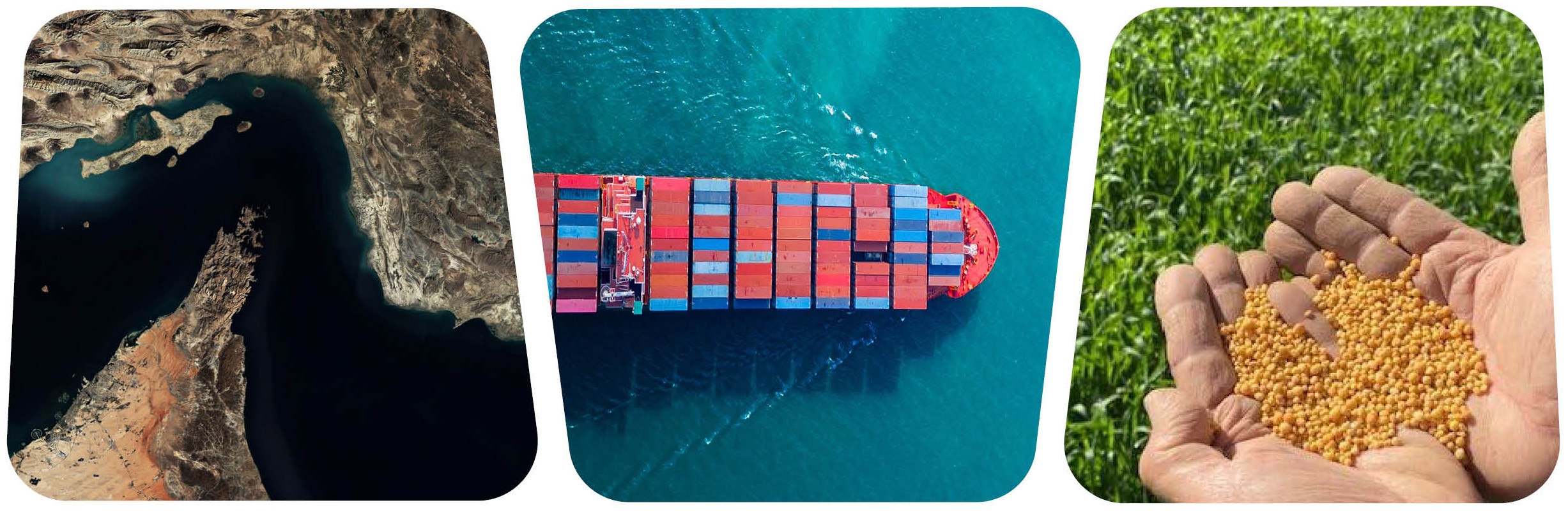
The ongoing confrontation between the United States and Israel with Iran, and the threats to block the Strait of Hormuz, are not merely a security or geopolitical story. They are a stark reminder of how fragile global supply chains truly are. Through this narrow maritime chokepoint, significant portions of the world’s energy regularly pass, most notably natural gas, along with critical inputs for the fertilizer industry such as ammonia and urea.
For an industry that depends on energy availability and the free flow of raw materials, this represents a potentially profound shock. But beyond the immediate impact on prices and supply, these events highlight a deeper shift, a change in how fertilizers must be understood.
Most attention is still focused on questions of availability: Is there enough fertilizer? Where does it come from? How do we ensure supply continuity? These are important questions, but they are not the core of the story. The central question of the coming decade is different: how do we extract more from every kilogram of fertilizer?
A shift in the industry’s economic model
The fertilizer industry has historically been built on three engines: scale, cost, and access to raw materials. Today, all three are losing their exclusivity. Competitive advantage is gradually shifting toward the ability to generate value in the field, through precision agronomy, technology, and solutions that deliver measurable outcomes for farmers. In other words, the industry is moving from a supply business to a performance business.
The economic implication is profound: companies that fail to demonstrate productivity gains per kilogram of fertilizer will struggle to remain relevant, even if they are strong in terms of resources.
Volatility is the new normal
The attempt to “wait for the market to stabilize” is no longer realistic. Volatility in energy markets, geopolitical fragmentation, trade disruptions, and climate change, all of these are not temporary events but structural features of the new business environment. In such a reality, risk management based on forecasts alone is insufficient. A more effective approach is reducing exposure, primarily through improving fertilizer use efficiency and precisely aligning inputs with crop needs.
The end of the dilemma: supply security vs. efficiency
In the past, companies and countries were forced to choose between supply security and efficiency. Today, technology makes it possible to combine both: to use fewer raw materials while still achieving more stable and improved outcomes.
This shift is also reshaping capital allocation in the industry: less investment in expanding volume, and more investment in innovation, advanced products, and knowledge-based solutions.
Power is shifting from mine to field
The structure of power in the industry is changing. While players with natural resources will remain important, real influence is moving toward those who control outcomes in the field. Companies that help farmers produce more with fewer inputs are not merely responding to demand, they are shaping it ! This is a new type of competitive advantage: control through value, not volume.
At the same time, the global market is moving toward regional fragmentation, driven by export restrictions and national policies. The implication is a shift from global optimization to regional resilience. In this reality, flexibility and efficiency become more important than scale alone.
Food security is being redefined
Even the concept of “food security” is changing. If in the past the question was whether enough food could be produced, today the question is whether it can be produced economically.
The gap between input costs and crop prices is putting heavy pressure on farmers. The result is not necessarily reduced fertilizer use, but rather a growing demand for solutions that deliver clear return on investment, stability, and predictability.
One metric that brings it all together
Amid all these changes, one key metric stands out: Nutrient Use Efficiency (NUE). This is a measure that connects economic, environmental, and agronomic dimensions, and is becoming a central performance indicator for the industry. Advanced products, including biostimulants (“plant vitamins”) and specialty fertilizers, are no longer a niche, but a central tool for navigating uncertainty.
The real test of the industry
Ultimately, the question is not whether the industry will grow, but how. Over the next five years, the fertilizer sector will shift from a focus on supply to a focus on productivity optimization. The companies that succeed will be those that can deliver measurable value to farmers: higher yields, lower risk, and reduced environmental impact.
The biggest strategic mistake would be to continue competing on quantity. In a world of constrained resources and rising uncertainty, the advantage will not belong to those who produce more, but to those who extract more from every kilogram.


