
Fertilization is essential to global food production – it supplies crops with the nutrients needed for healthy growth and abundant yields. However, nutrient management has a significant environmental dimension. Inefficient fertilizer use can cause pollution, waste resources, and contribute to climate change. That is why sustainable fertilization is no longer optional – it is a necessity.
By combining smart fertilizers, precise application methods, and smart fertilizer software, farmers can maintain productivity while reducing the fertilizer carbon footprint. Haifa’s approach focuses on maximizing Nutrient Use Efficiency (NUE) and minimizing harmful outcomes, offering products and tools that support a more sustainable agricultural future.
What is Nutrient Use Efficiency?
Nutrient Use Efficiency (NUE) refers to how effectively plants absorb and use the nutrients applied through fertilization. High NUE means that most of the applied nutrients are taken up by the crop, promoting growth and yield without significant losses to the environment. Low NUE, on the other hand, indicates that a large portion of the nutrients is lost through leaching, runoff, volatilization, or immobilization in the soil.
Haifa’s plant nutrition philosophy is built around improving NUE. By supplying nutrients in forms and combinations that plants can readily absorb, and by applying them at the right time and place, farmers can achieve maximum yield per unit of nutrient applied – directly reducing waste and environmental harm.
In what ways does fertilization affect the environment?
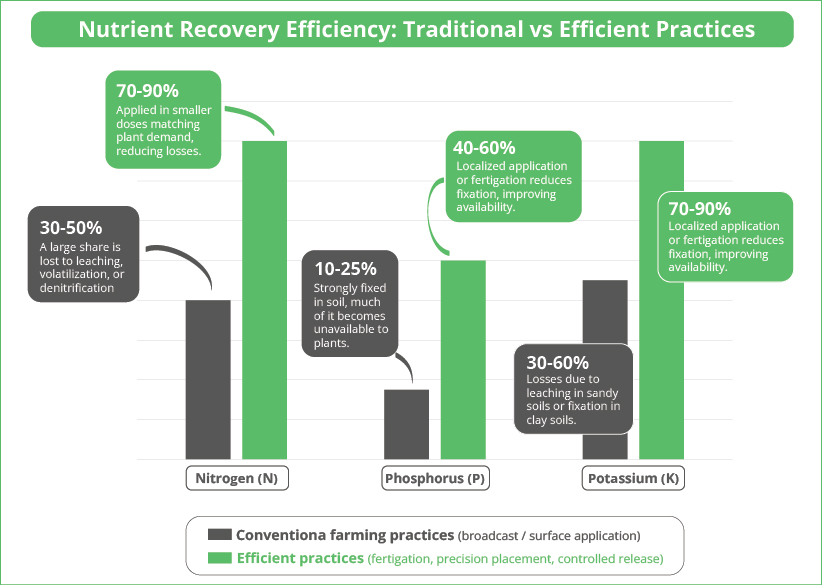
When fertilizer supply does not match crop needs, nutrients can be lost to the environment in several ways:
- Leaching – Dissolved nutrients, especially nitrates, move with water beyond the root zone, eventually reaching groundwater or surface waters. This can cause eutrophication, harming aquatic ecosystems and contaminating drinking water.
- Runoff – Nutrients are washed away with surface water after irrigation or rain, entering streams, rivers, and lakes, where they degrade water quality.
- Volatilization – Nitrogen from certain fertilizers, especially urea-based products, can be converted to ammonia gas and released into the atmosphere, contributing to air pollution and acid rain, while representing a direct loss of valuable nutrients.
- Soil fixation – Some nutrients, like phosphorus, can become bound in the soil in forms unavailable to plants. While not directly polluting, it reduces NUE and requires higher application rates, increasing the risk of other losses.
Beyond these direct impacts, fertilizer production, transport, and application require energy and resources, contributing to greenhouse gas emissions. Inefficient fertilizer use amplifies the carbon footprint of agricultural production across the supply chain.
How can farmers minimize environmental impact?
Sustainable fertilization is about precision – supplying exactly what the crop needs, when it needs it, and in the right balance. Key strategies include:
1. Use precise application methods
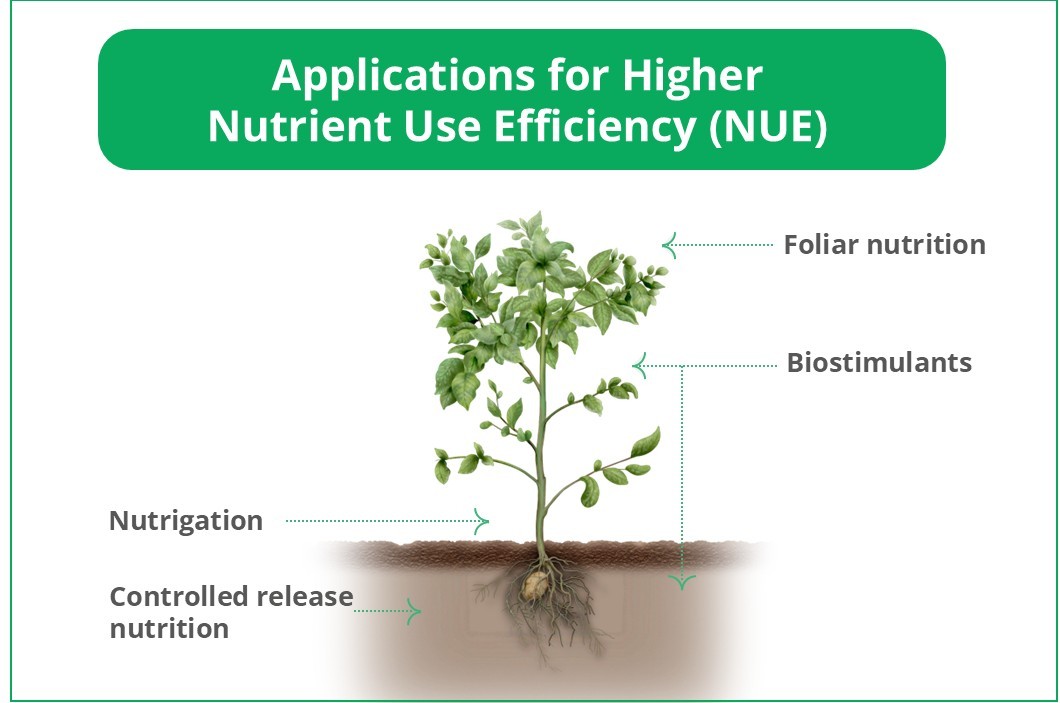
- Fertigation delivers nutrients dissolved in irrigation water directly to the root zone, ensuring uniform distribution and reducing losses.
- Controlled Release Fertilizers (CRF), such as Multicote™, gradually release nutrients over time, matching plant demand and minimizing leaching and volatilization.
2. Choose the right fertilizers
Select fertilizers that provide the crop with essential nutrients while avoiding harmful or unnecessary elements. For example, using potassium chloride (KCl) adds about 0.75 kg of chloride for every kilogram of K₂O applied – an element that does not benefit the plant and can even be harmful.
In contrast, Multi-K™ potassium nitrate delivers potassium together with nitrate nitrogen – an efficient nitrogen source that also facilitates potassium uptake.
3. Provide balanced nutrition
Applying all essential nutrients in the right proportions prevents deficiencies that reduce growth and waste applied fertilizers. Nutrigation™ (fertigation) allows precise adjustment of nutrition composition throughout the growth cycle.
Combine soluble fertilizers such as Multi-K™, Haifa MAP™, and Haifa Cal™ to achieve the desired nutrient balance, and complement with Haifa Micro™ products for micronutrient supply. Foliar feeding with Haifa Bonus™ and Poly-Feed™ Foliar quickly corrects deficiencies and boosts NUE.
4. Enhance nutrient uptake
Specialty products like HaifaStim™ Vigor improve root activity, promote nutrient absorption, and enhance plant resilience to stress – helping crops make the most of applied fertilizers.
5. Avoid under-fertilization
While over-application can harm the environment, insufficient fertilization also has consequences. Producing less yield with the same land, water, and energy increases the environmental footprint per unit of food produced.
How can smart fertilization software support sustainability?
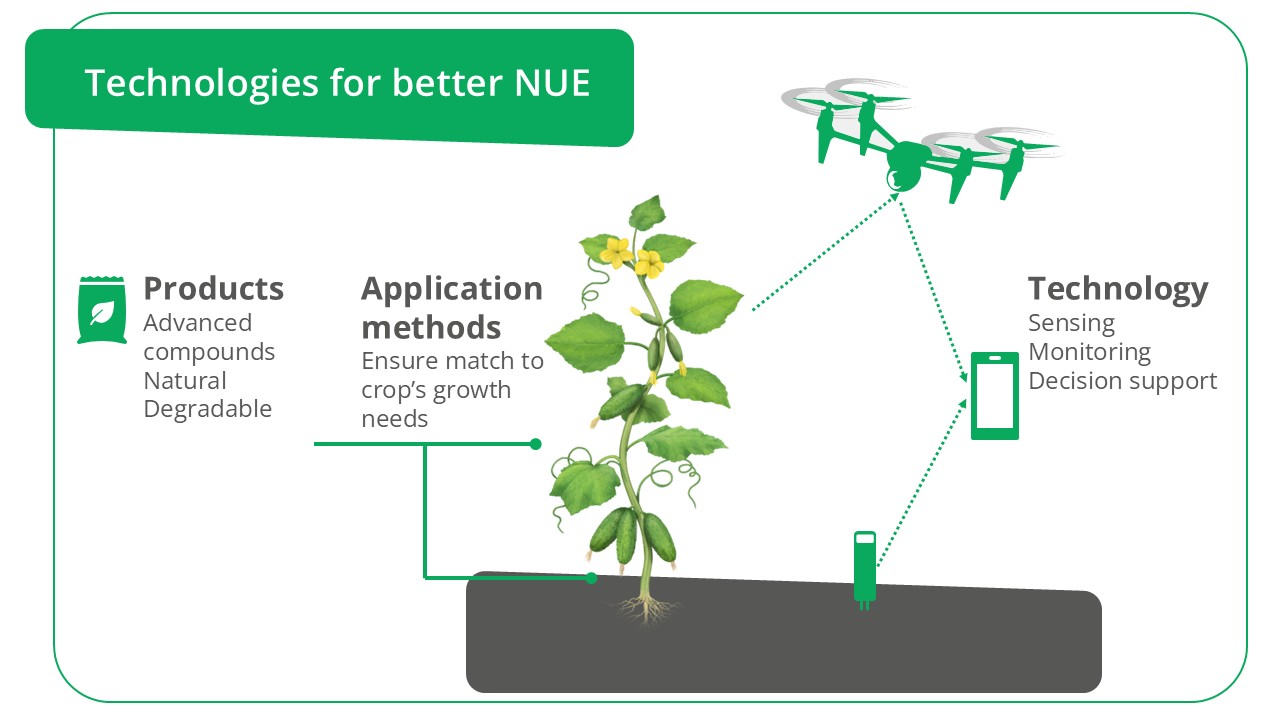
Digital agriculture tools are transforming fertilization planning. NutriNet™ and MultiMatch™ smart fertilizer software enable farmers to create tailor-made nutrition programs that match crop requirements, soil conditions, and environmental goals.
By integrating these tools into daily farm management, growers can fine-tune fertilization strategies to improve efficiency, reduce waste, and assess environmental impact. This ensures environmentally smart decisions that align productivity with sustainability.
How can we estimate the carbon footprint of fertilization?
The fertilizer carbon footprint accounts for greenhouse gas emissions from every stage of the product’s lifecycle — from raw material extraction to manufacturing, packaging, transportation, storage, and application. It also includes emissions related to nutrient losses, such as nitrous oxide released from the soil.
Key factors influencing the fertilizer carbon footprint include:
- Type of fertilizer – Nitrogen fertilizers generally have higher footprints than potassium or phosphorus fertilizers due to energy-intensive production.
- Application method – Inefficient broadcast application causes higher losses compared to precision techniques like fertigation or CRF.
- Nutrient recovery rate – Higher NUE reduces the footprint per unit of yield.
Haifa’s NutriNet™ and MultiMatch™ not only optimize nutrient recommendations but also estimate the environmental impact of the suggested program – giving farmers actionable insights to balance yield goals with carbon reduction.
Conclusion: Fertilizing for the Future
Agriculture faces a dual challenge: feeding a growing population while protecting natural resources. Fertilization is central to this balance. When done inefficiently, it can harm ecosystems, waste resources, and increase the agricultural carbon footprint. When done smartly, it becomes a powerful tool for sustainable food production.
Haifa’s integrated approach – combining advanced fertilizers, precision application, and digital decision-making – enables farmers to achieve optimal yields with minimal environmental cost. By focusing on Nutrient Use Efficiency, employing smart fertilizer software, and understanding the fertilizer carbon footprint, we can fertilize for the future: abundant harvests with a smaller footprint.


