

Banana cultivation is a cornerstone of agriculture in southeastern Mexico, particularly in the states of Chiapas and Tabasco. However, many long-established plantations – often grown under rainfed conditions – face persistent challenges such as soil compaction, weak root development, and limited nutrient uptake. These constraints are further intensified by conventional fertilization practices, where granular fertilizers are applied only 4–8 times per year, highlighting the need for more efficient nutrient utilization strategies.
Strengthening root development has therefore become a key agronomic priority. Poor root systems are directly linked to reduced plant vigor, leaf bunching, smaller fruit size, and overall lower productivity. To address these challenges, root biostimulation is increasingly integrated into crop management practices.
While hormonal treatments have traditionally been used to stimulate rooting, growers are increasingly adopting advanced solutions such as amino acid complexes and seaweed extracts to enhance root growth and promote the formation of active root hairs. Building on this approach, a trial was conducted to evaluate the effect of a nutrition program combining Poly-Feed™ NPK fertilizers with HaifaStim™ biostimulants.
Trial details
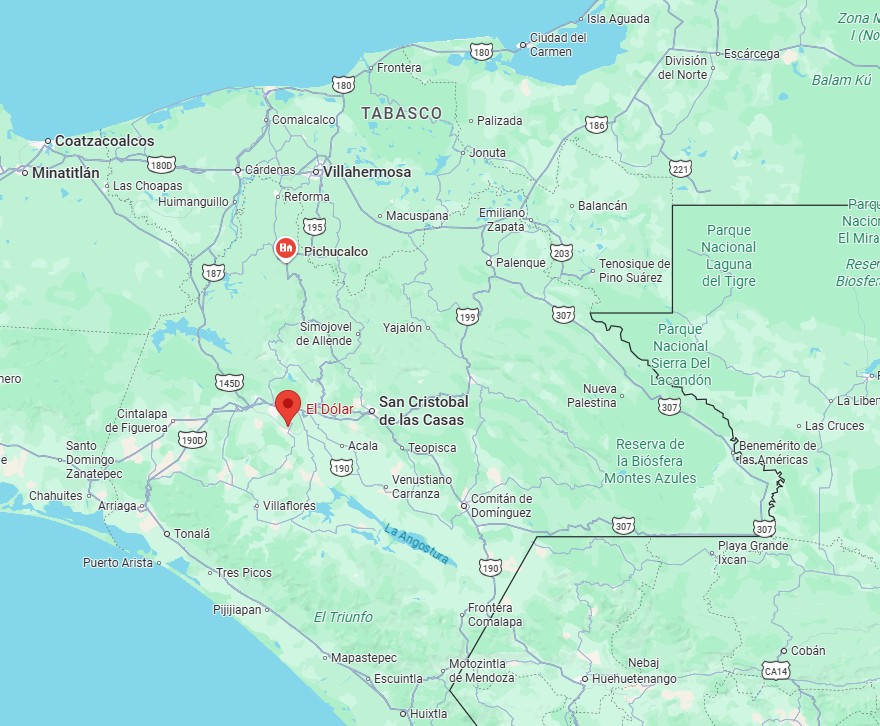
Location: El Dólar farm, Pichucalco, Chiapas State, Mexico
Treatments
Haifa treatment
| Product | 1st application | 2nd application |
| 1 kg/ha | 2 kg/ha | |
| 2 kg/ha | 1 kg/ha | |
| 5 kg/ha | 5 kg/ha |
The products were applied by drenching, in water volume of 200 L/ha.
Commercial control
| Product | 1st application | 2nd application |
Humic & Fulvic Acids | 3 L/ha | 3 L/ha |
Hormonal complex | 2 L/ha | 2 L/ha |
8-24-0 | 4 L/ha | 4 L/ha |
1st application: December 2024
2nd application: April 2025
Results
Root growth
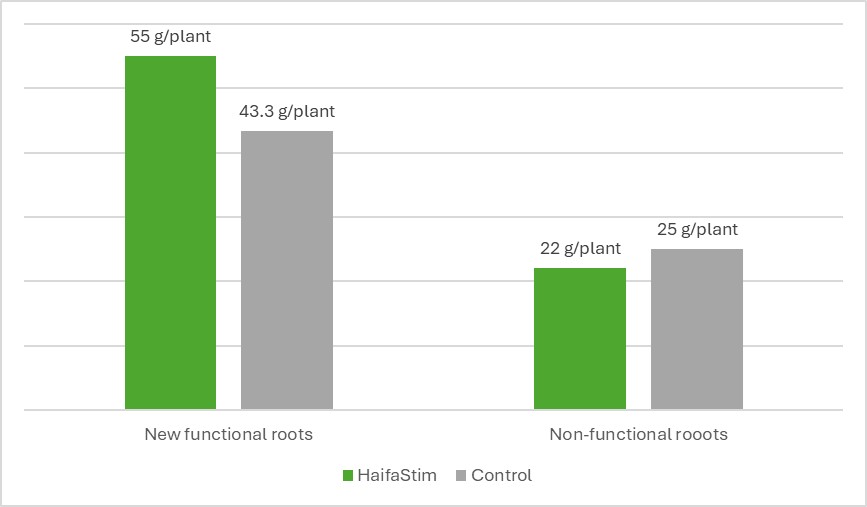
Root sampling was conducted on January 28, 2025. Samples were collected in front of the sucker of the newly sprouted mother plant. Five subsamples per plant were taken, and their average was used to determine root weight.
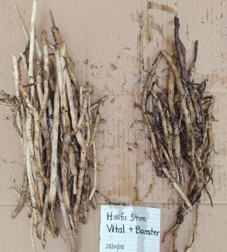 | 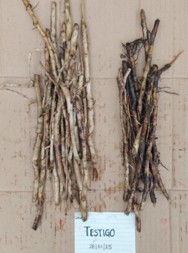 |
The HaifaStim™ treatment resulted in a 27% increase in active, healthy roots, along with a 12% reduction in non-functional root mass. These results clearly demonstrate improved root quality under the HaifaStim™ program.
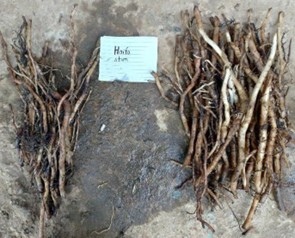
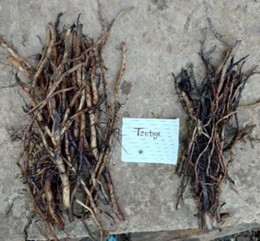
Another root sampling was carried out after the second application, showing an even greater improvement in both the quality and volume of functional roots under the HaifaStim™ treatment.
 |  |
Biometric Evaluation of Daughter Plants
To assess the effect of the program on crop continuity and plant vigor, biometric data were collected from daughter plants. Ten newly sprouted plants per treatment were marked and monitored throughout the cycle. Sucker height and stem thickness were recorded at defined intervals.
At the early stage, thickness was measured at 60 cm from the base (plants <1 m). Once plants exceeded 1 m, measurements were taken at 100 cm – the standard reference point – allowing comparison between the original mother plant and the new generation sucker.
All data presented are averages of the 10 monitored plants per treatment.
| Weeks after flowering | Treatment | Height (cm) | D Ø 60 cm | D Ø 100 cm |
| 0 | HaifaStim | 95.125 | 18.13 |
|
Control | 89.8 | 16.8 |
| |
| 3 | HaifaStim | 105.3 | 22.6 |
|
Control | 99.4 | 19.8 |
| |
| 10 | HaifaStim | 180.8 | 41.9 | 31.9 |
Control | 179.7 | 39.8 | 31 | |
| 16 | HaifaStim | 238.3 |
| 45.4 |
Control | 233 |
| 44 | |
| 25 | HaifaStim |
| Fully emerged | 67.3 |
Control |
| Fully emerged | 63.8 |
Earlier and More Uniform Harvest
At 11 weeks after flowering, 100% of the bunches in the HaifaStim™ treatment reached harvest readiness, achieving the required fruit length and caliber.
In contrast, only 75% of the control plants were harvested, indicating delayed development and uneven fruit sizing.
This highlights the direct impact of improved root function on faster crop cycles and more uniform production.
Stronger Plant Structure
While plant height development was similar between treatments, a clear advantage was observed in stem thickness:
- +8% increase in stem diameter (at 100 cm) in HaifaStim™-treated plants
- Greater structural strength and plant vigor
Thicker stems indicate enhanced nutrient and water storage capacity, supporting better fruit development and overall plant performance.
Improved Generational Vigor
A key indicator of plantation sustainability is the performance of the successor plant. HaifaStim™ treatment showed a +3 cm increase in stem thickness compared to the mother plant, while control plants showed a decline in vigor (-3.6 cm).
In addition, successor plants under HaifaStim™ were taller and more vigorous, whereas control plants showed a significant reduction in growth (−25.9 cm)
This demonstrates a clear advantage in maintaining plantation productivity across cycles.
Conclusions
The integration of HaifaStim™ biostimulants into banana nutrition programs proved to be a powerful driver of plant performance and crop continuity. By enhancing root activity and plant physiology, the program delivered measurable improvements in sucker vigor, stem strength, and overall crop uniformity.
Beyond vegetative growth, the impact translated directly into production: earlier and more uniform harvests, improved fruit caliber, and a more efficient crop cycle. These advantages are critical for growers aiming to maximize productivity and marketable yield.
By strengthening both the current crop and the next generation of plants, HaifaStim™ provides a sustainable, high-impact solution for banana cultivation – supporting higher yields, better fruit quality, and improved long-term profitability.
Report by Jose Perez, Haifa Mexico