
From “uniform spreading” to uniform nutrition
In open-field production, the real goal isn’t simply to spread fertilizer evenly across the soil surface – it is to ensure that every plant can access a similar share of nutrients. When fertilizers are broadcast over the entire field, a significant portion may end up outside the active root zone, especially early in the season when root systems are still limited. The result is lower efficiency, higher nutrient losses, and greater variability in crop performance.
Efficient fertilizer distribution methods share one common principle: placing nutrients as close as possible to the zone of active root uptake – at the right time and in the right form. Below is a practical review of three common approaches, their advantages and limitations, and how Haifa solutions support each strategy.
Band placement of fertilizers
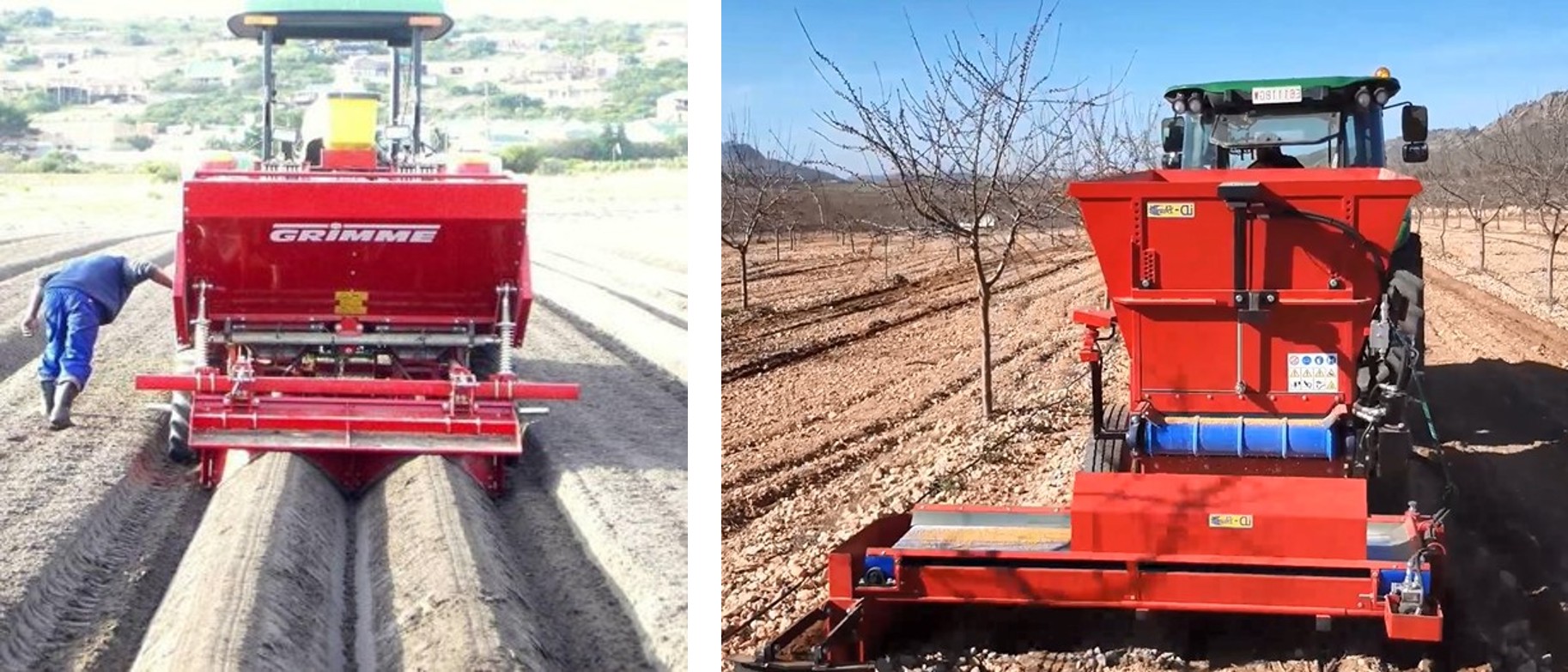
Inefficient fertilizer use can be partially addressed by placing granular fertilizers in bands near the seed row or alongside the crop row, rather than distributing them across the entire soil surface. This approach positions nutrients where roots are expected to develop and actively absorb them, improving early nutrient availability and uptake efficiency.
A key drawback of banding is the risk of seedling injury (salinity or ammonia damage) if fertilizers are placed too close to the seed or applied at excessive rates. In addition, banding is essentially a single-event feeding strategy: a one-time application rarely meets the crop’s nutritional demand throughout the entire season, often requiring supplementary mid-season applications to sustain growth and yield.

Right: banding – nutrients are placed where they are needed.
Controlled-release fertilizers (CRFs) – Single application, multiple benefits
Controlled-release fertilizers consist of nutrient granules encapsulated in an insoluble, semi-permeable coating that regulates nutrient release over time. Release is driven mainly by soil moisture and temperature, allowing nutrients to be supplied gradually to the root zone in closer alignment with crop demand. CRFs can be applied in-row, in bands, or incorporated into the soil, typically using dedicated machinery that ensures accurate placement and dosing – supporting more uniform plant nutrition across the field.
Why it works:
- Season-long feeding from one application: Nutrient release better follows crop uptake patterns.
- Reduced nutrient losses: Lower risk of leaching and volatilization compared with large, single applications of conventional fertilizers.
- More stable crop performance: Especially valuable when weather conditions limit access for topdressing or split applications.
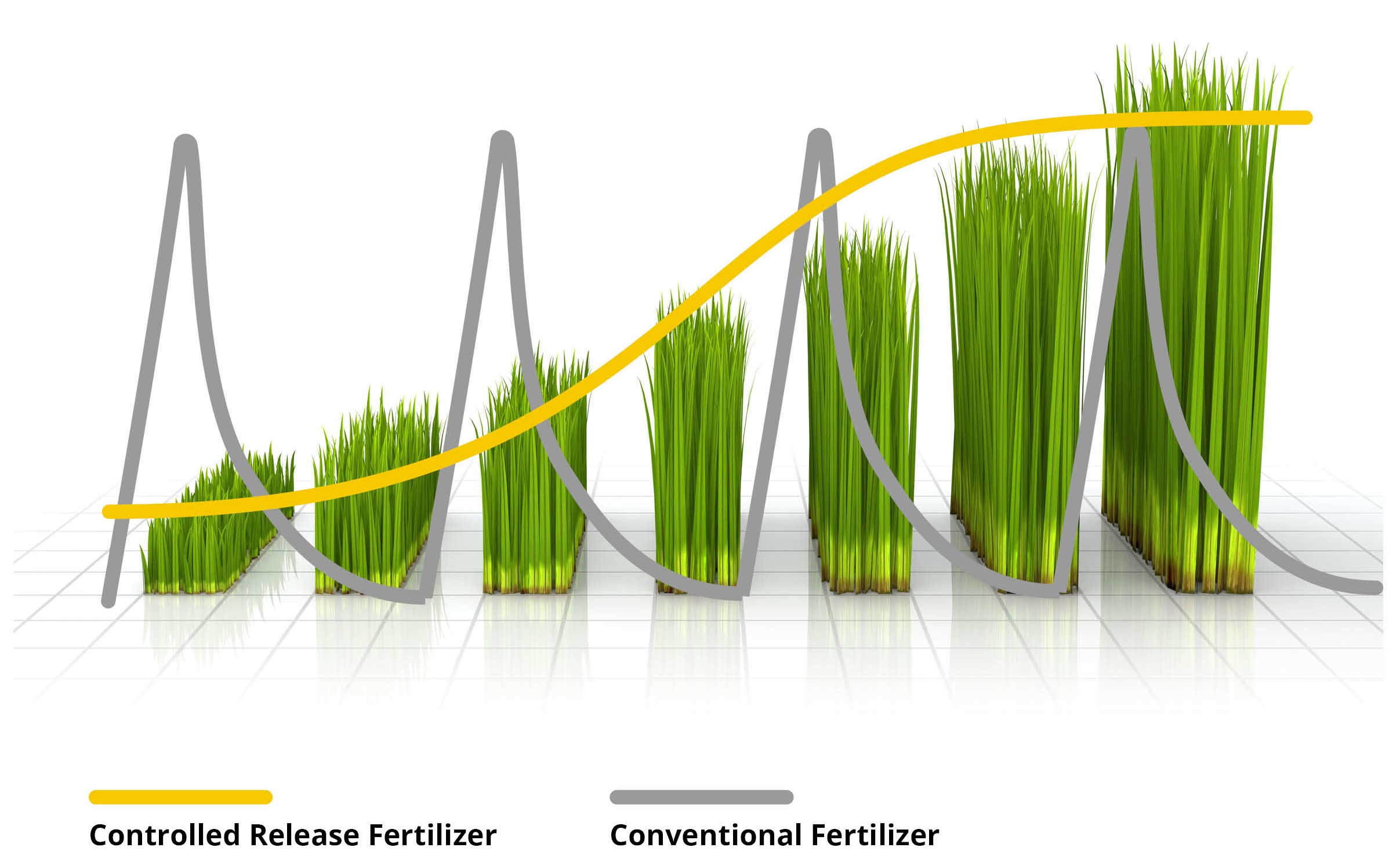
CRFs: nutrient availability suits plant growth demands.
CRFs are particularly beneficial where split application of conventional fertilizers is impractical, where frequent rainfall accelerates nutrient leaching, or where labor efficiency and improved nutrient use efficiency are priorities.
Haifa’s Multicote™ Agri and CoteN™ controlled-release fertilizers support optimized nutrition in open-field crops, helping growers improve nutrient use efficiency and crop uniformity. The MultiMatch™ online tool further enables precise matching of fertilizer formulation, release profile, and application rate to specific crop needs and growing conditions.
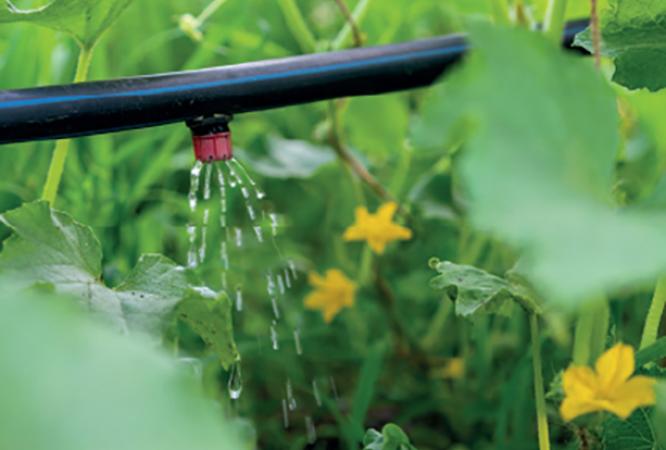
Nutrigation™ (fertigation) – A flow of precision nutrition
Nutrigation™ – the application of fertilizers through the irrigation system (primarily micro-irrigation, but also pivot systems) – delivers nutrients directly to the active root zone and provides a high level of control over nutrient composition, rates, and timing. By synchronizing water and nutrient supply, Nutrigation™ enables precise, responsive nutrition management throughout the growing season.
Why it works:
- Maximum placement accuracy: Nutrients move with irrigation water directly into the root zone.
- True “uniform nutrition” over time: Frequent, small applications closely follow crop nutrient uptake curves.
- Rapid correction capability: Nutrient deficiencies can be addressed quickly using fully soluble formulations.
- High flexibility: Nutrient programs can be adjusted according to growth stage, weather conditions, and soil or tissue analyses.
Haifa offers comprehensive Nutrigation™ solutions, combining a broad portfolio of high-purity, water-soluble fertilizers with NutriNet™, an advanced digital platform for precision nutrient management in irrigated systems.
The bottom line: “uniform nutrition” is a system, not a single application
Open-field conditions are inherently complex. Soil variability, changing weather patterns, and uneven root development all influence nutrient availability and uptake. As a result, the most efficient fertilizer distribution strategy is the one that best fits the specific production reality – crop value, irrigation infrastructure, soil characteristics, labor availability, and climate risk.
Haifa’s strength lies in combining high-quality fertilizers with field-oriented agronomic expertise and digital decision-support tools, helping growers move beyond uniform spreading toward consistent plant performance across the entire field.