







Effective turf nutrition requires understanding the complex interactions between turfgrass physiology, environmental conditions, and management practices. Haifa's turf nutrition concept is based on matching nutrient supply to the turf plant's changing requirements throughout the year, helping maintain healthy, resilient, and attractive turf under a wide range of conditions.
Factors Affecting Turf Nutritional Requirements
Climate
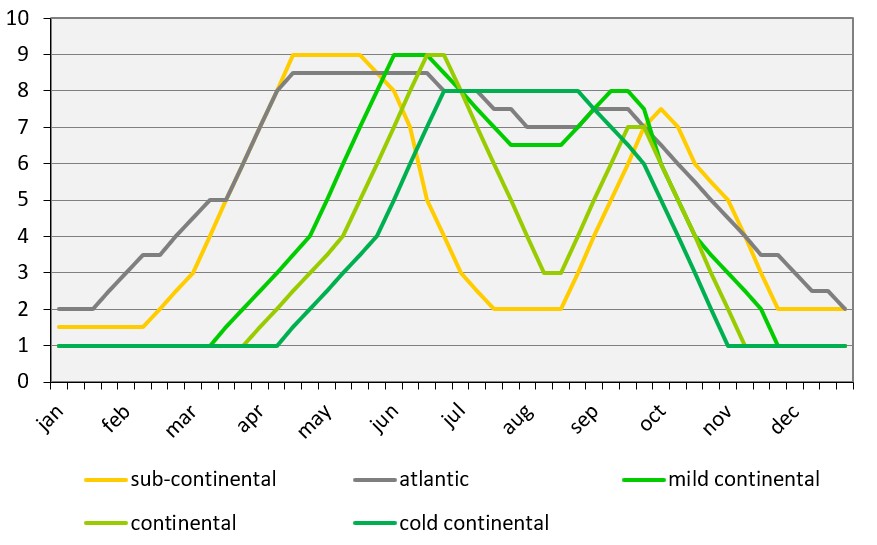
Turfgrass growth is strongly influenced by climate. Each turf species follows a characteristic growth pattern that varies between climate zones. The graph below illustrates the seasonal growth curves of a Lolium–Poa–Festuca mixture under different climatic conditions (months refer to North hemisphere).
Because growth dynamics differ from one region to another, turf fertilization programs should be adapted to local climate conditions and growth patterns.
Annual Growth Cycle
The nutritional requirements of turfgrass change throughout the year. Different nutrient ratios are needed to support seasonal processes such as dormancy break, active vegetative growth, stress tolerance, carbohydrate accumulation, and winter preparation.
Intended Use
Nutritional programs should also reflect the intended use of the turf.
Sports fields, golf courses, and other intensively used turf areas require enhanced nutrition to maintain density, strength, recovery capacity, and resistance to mechanical wear. Recreational and landscape turf generally requires less intensive fertilization while still maintaining quality and appearance.
Key Nutritional Parameters
Nitrogen-to-Potassium (N:K) Ratio
Both the total nutrient supply and the balance between nitrogen and potassium are critical for turf quality.
Nitrogen promotes shoot growth and turf density, while potassium supports stress tolerance, root development, wear resistance, and overall plant strength. The optimal N:K ratio changes throughout the growing season according to the physiological needs of the turf plant.
Nutrient Availability
Conventional fertilizers release nutrients immediately after application, which may result in temporary nutrient surpluses, uneven growth, and increased weed pressure.
Controlled-release fertilizers provide nutrients gradually over an extended period, delivering a more consistent nutrient supply that better matches turfgrass demand. Different coating technologies and release durations allow turf managers to balance performance requirements with maintenance budgets.
Nitrogen-to-Potassium (N:K) Ratio
Both the total nutrient supply and the balance between nitrogen and potassium are critical for turf quality.
Nitrogen promotes shoot growth and turf density, while potassium supports stress tolerance, root development, wear resistance, and overall plant strength. The optimal N:K ratio changes throughout the growing season according to the physiological needs of the turf plant.
Nutrient Availability
Conventional fertilizers release nutrients immediately after application, which may result in temporary nutrient surpluses, uneven growth, and increased weed pressure.
Controlled-release fertilizers provide nutrients gradually over an extended period, delivering a more consistent nutrient supply that better matches turfgrass demand. Different coating technologies and release durations allow turf managers to balance performance requirements with maintenance budgets.
Potassium Source
Several potassium fertilizers are commonly used in turf management, including potassium nitrate, potassium sulfate, and potassium chloride.
Potassium nitrate offers unique advantages because it supplies two essential nutrients – potassium and nitrogen – in forms that are readily available to the plant. It is highly soluble, chloride-free, and compatible with a wide range of turf nutrition programs.
In addition, potassium nitrate can help reduce the risk of Black Layer formation thanks to its oxidizing effect and the absence of sulfate ions.
Haifa's Approach to Turf Fertilization
To meet the diverse requirements of turfgrass under varying climatic conditions and management objectives, Haifa offers a range of products that combine the benefits of controlled-release fertilizers and potassium nitrate.
Our year-round turf nutrition programs incorporate fertilizers with different N ratios, allowing nutrient supply to be aligned with seasonal growth dynamics and performance objectives.
| N:K ratio | Action |
| 2:1 | Dormancy breaking, initiation of intensive leaf growth |
| 1:1 | Balanced fertilization to regulate root and shoot growth; Maintenance of turf quality and strength during seasons of intensive use. |
| 1:2, 1:3 | High potassium fertilizers support last leaf growth at autumn and help building carbohydrate storage for the winter time. |