
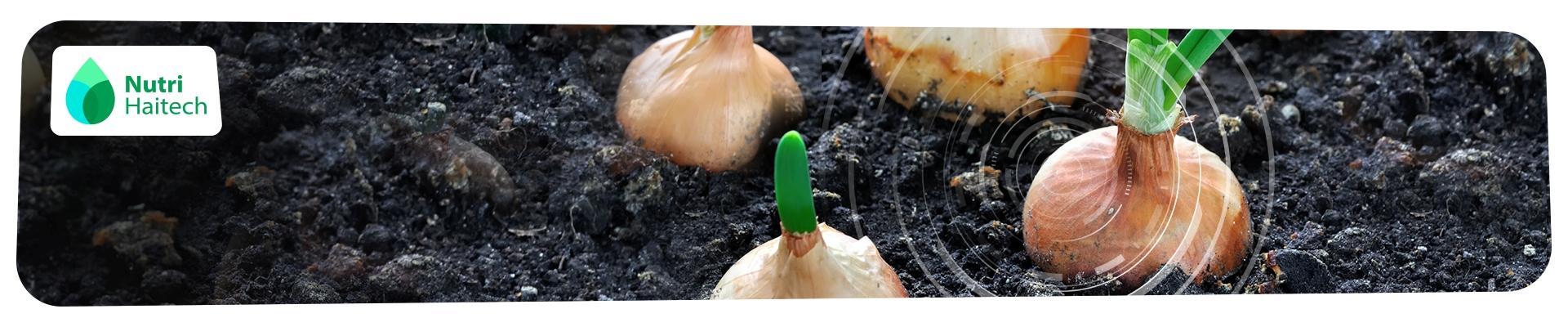




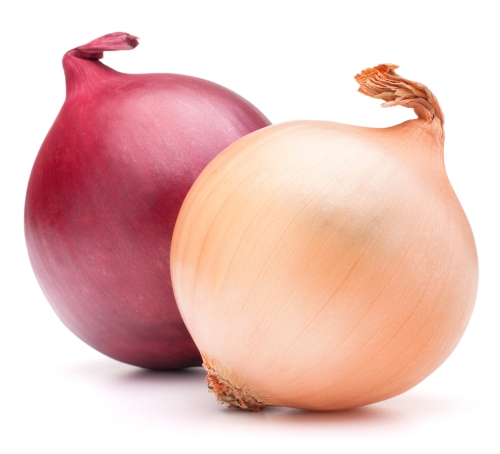
 Onion (Allium cepa L.), a member of the Liliaceae family, is a herbaceous bulbous plant cultivated primarily for its edible bulb. Depending on cultivation practices and climate, it may be grown as a biennial or perennial crop. In the first year, the plant forms a bulb that serves as a storage organ, enabling survival through dormancy. In the second year, it produces a flowering stalk, followed by blooms and seeds.
The growth and development of onions are highly sensitive to environmental factors. Therefore, selecting the appropriate variety and planting time is crucial to achieving optimal results.
Believed to have originated in the mountainous regions of Central Asia, onions are one of the most widely adapted vegetable crops, grown successfully from tropical to subarctic zones. Global onion production reaches nearly 85 million tons annually, cultivated on approximately 4.4 million hectares.
Onion varieties
A wide range of edible onion varieties exists, differing in size, shape, color, and flavor. Bulb onions are the most common type, representing the majority of cultivated area and global yields.
Onions are particularly sensitive to both day length and temperature. Successful cultivation depends on choosing a variety suited to the local photoperiod and climate. Day length determines the transition from vegetative growth to bulb development:
Longer days promote vegetative growth, resulting in more and larger leaves.
Shorter days trigger the shift to bulb formation, as nutrients are redirected from the foliage to the developing bulb.
Temperature also influences growth—warmer conditions can accelerate bulb formation, partially offsetting shorter daylight hours.
Bulb onions are classified into three main groups based on day-length requirements:
- Short-day varieties: Bulb when exposed to 11–12 hours of daylight.
- Intermediate-day varieties: Require 13–14 hours of daylight.
- Long-day varieties: Bulb under 14–16 hours of daylight—these are best suited for northern climates, such as in the northern U.S. and Canada.
Onion cultivars are also categorized by bulb color: yellow/brown, white, or red. Varieties of the same color often share similar agronomic traits and flavor profiles.
Growth Stages
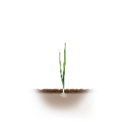 | 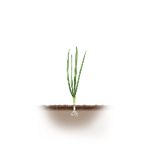 | 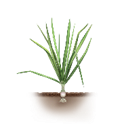 | 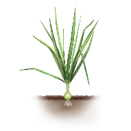 | 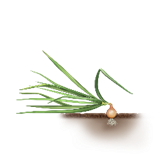 | |
Stage | Establishment | Vegetative growth | Bulb initiation | Bulb development | Maturation |
Duration | 30 days | 30 days | 30 days | 45 days | 15 days |
Description | 1 to 2 true leaves | From 4 to 7 true leaves; ‘leek’ stage. The 4th leaf appears, and the neck of the plant starts to thicken | Bulb diameter is twice that of the neck; 8 to 12 true leaves. The 2nd and 3rd leaves fell. The plant reaches maximum height | Leaves continue to grow and elongate, but the total area and number of leaves remains rather constant. | Bulb expansion near completion; more than 50% tops bend down. |