
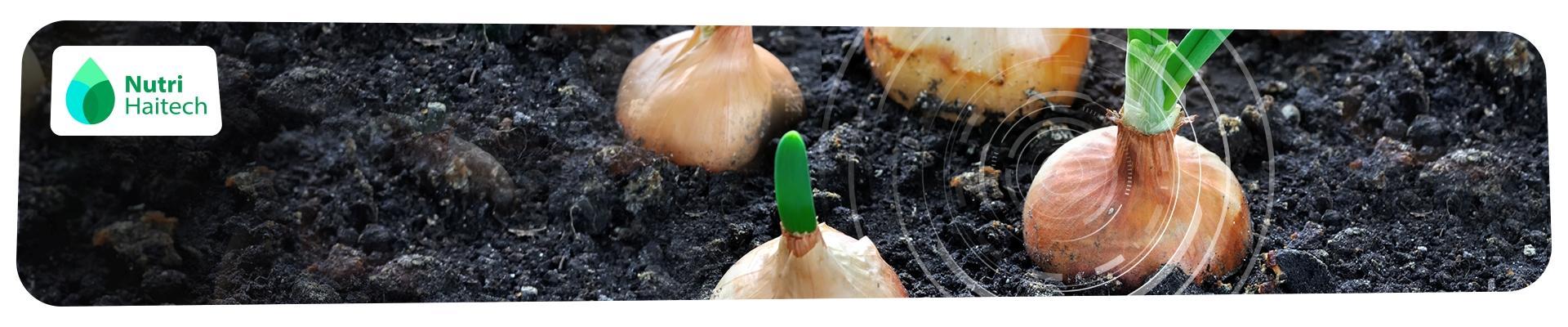




Being one of the most widely adapted vegetable crops, onions are grown successfully under a wide range of conditions. However, the development of onions is highly sensitive to environmental factors, so selecting the appropriate variety and planting time is crucial to achieving optimal results.
Climate
Onions thrive in mild climates, free from extreme temperatures and excessive rainfall. The optimal mean daily temperature for onion cultivation ranges between 15°C and 20°C.
Under typical conditions, the bulb forms during the first growth season, with flowering occurring in the second.
Bulb development is strongly regulated by day length, which varies by variety – from 11 to 16 hours. Cool weather and sufficient moisture during the early growth stages favor strong establishment. In contrast, warm and dry conditions during the ripening phase contribute to higher yields and better bulb quality.
Soil
Onions can grow in a wide range of soil types but perform best in fertile, well-drained, medium-textured soils. These soils allow timely mechanical operations after rainfall or irrigation, supporting effective management of diseases, pests, and weeds.
To promote healthy growth, raised beds should ideally be arranges in the direction of the prevailing wind, to improve air circulation. Optimal soil pH ranges between 6.0 and 7.0.
Typical nutrient requirements for onions:
- Nitrogen (N): 200–300 kg/ha
- Phosphorus (P): 100–150 kg/ha
- Potassium (K): 300–400 kg/ha
Soil Nutrient Status Guide (ppm)
Soil status | Phosphorus | Potassium | Zinc |
Severely deficient | 0-5 | <40 | <0.3 |
Deficient | 5-9 | 40-80 | 0.3-0.5 |
Intermediate | 10-15 | 80-120 | 0.5-0.8 |
Sufficient | >15 | >120 | >0.8 |
Analytical methods: Phosphorus – Olsen bicarbonate; Potassium – Ammonium acetate (Source: UC Davis 2016)
Irrigation
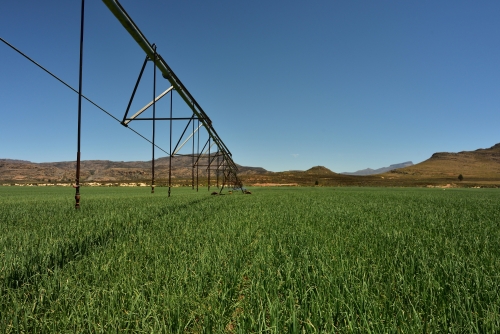
| Frequent, light irrigation is preferred, timed when about 25% of the available water in the top 30 cm of soil is depleted. A typical interval is every 2–4 days. Over-irrigation increases the risk of diseases such as white rot and mildew. Irrigation should be stopped 15 to 25 days before harvest, as late watering can delay maturity and cause skin cracking. Onions are extremely sensitive to water stress, particularly during bulb formation. Water deficits at this stage can significantly reduce bulb size and yield, and may cause bulb splitting or the formation of double/multiple bulbs. double and multiple bulbs. |
Salinity
Onions are sensitive to soil salinity. The following table illustrates the effect of increasing salinity on yield:
Conductivity (mmhos/cm) | 1.2 | 1.8 | 2.8 | 4.3 | 7.5 |
Yield decrease | 0% | 10% | 25% | 50% | 100% |
Fertilizer incorporation into beds before sowing may raise salt concentrations, potentially damaging seedlings. Once established, onions become more tolerant of salinity, but issues such as boron or sodium toxicity – often linked to irrigation water – must be managed.
Weed competition
Onions are naturally poor competitors due to their slow early growth and upright foliage. Effective weed control is essential from sowing onward to avoid competition for nutrients