






Growth conditions
Growing regions: As a subtropical crop, citrus can be grown in a belt between 40°N and 40°S, except at high elevations. Minimum temperature and its duration are the main limiting growth factors. Sensitivity depends on the variety, rootstock, tree dormancy, and the absolute minimum temperature and its duration.
Climate: Citrus can be cultivated in both arid and humid climates. However, due to its sensitivity to low temperatures, the key limiting factor is the minimum winter temperature.
Soil: Citrus grows on a wide range of soils, from sandy to loamy and clay soils. Both acidic and alkaline conditions are suitable.
Intensive citrus cultivation requires fertilizers, effective irrigation, canopy (tree size) management, and close monitoring and control of pests, diseases, and weeds. Trees begin their productive life in the third year, with peak productivity occurring between 10 and 30 years of age. Under these conditions, average yields range from 30 to 60 t/ha.
Planting density and expected yield
Tree spacing is influenced by several factors, including citrus species, cultivar, rootstock, environmental conditions, orchard size, and management practices. For example, mechanized orchards require sufficient spacing between rows to allow equipment access at maturity.
Site quality – such as soil characteristics and water availability – must also be considered. Additionally, the expected orchard lifespan may be affected by freeze risk, disease pressure, or land-use changes.
Tree densities typically range from 286 trees/ha (4.5 × 6.5 m) to 540 trees/ha (3 × 6 m). Higher densities (up to 865 trees/ha) may be tested on a limited scale.
Tree vigor is a key factor in determining spacing, density, topping, and hedging strategies. While citrus trees are adaptable, optimal economic returns are achieved when trees develop properly within their allocated space.
Irrigation of citrus crops
Irrigation is one of the most important factors determining yield and fruit quality in citrus. Irrigation timing and rates directly affect tree health and fruit-bearing capacity. Inadequate irrigation increases susceptibility to nutrient deficiencies, physiological disorders, pests, and diseases.
Correct irrigation scheduling requires understanding of:
- How much water can be held in the crop root zone
- How much water the crop uses each day
- How much water the irrigation system applies
Since citrus trees have a relatively shallow root system, irrigation should target the effective root zone to minimize water and nutrient leaching. This zone is typically within the top 30–40 cm of soil, depending on soil type.
Salinity sensitivity of citrus crops
Citrus growth and fruit production are impaired by soil salinity. In general, yield reduction occurs at electrical conductivities (EC) above 1.4 ds/m.
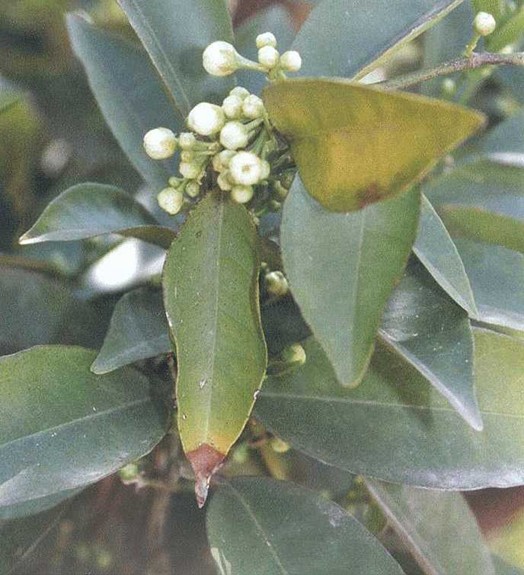
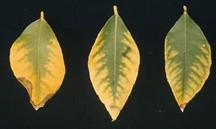
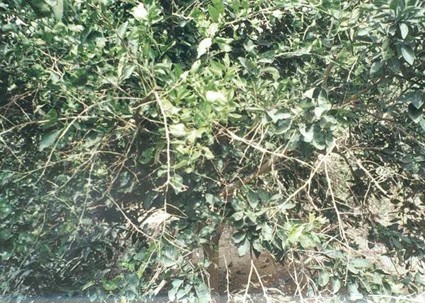
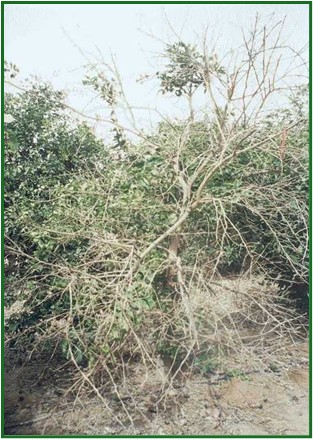
Symptoms of salt toxicity typically begin with yellowing and grey to light-brown necrosis at the leaf tip. The damage gradually extends backward from the tip and may spread along the leaf margins. A variable degree of chlorosis often develops ahead of the necrotic tissue. Symptoms usually appear first on older leaves, followed by significant leaf drop and eventual dieback.
| 
|
|  |
The use of more tolerant scions and salt-excluding rootstocks helps minimize salt injury to trees and loss of production. When soil or water is saline, Application of potassium nitrate and calcium will suppress chloride and sodium uptake and reduce salinity stress.
Multi-K™ potassium nitrate helps to combat salinity by suppressing the uptake of chloride and sodium. The antagonistic effects of nitrate-nitrogen (NO3-) and potassium (K+) suppress these ions, Cl- and Na+.