

Citrus growers across South Africa face a common challenge: orchards that underperform despite standard fertilizer programs. Low yields, inconsistent fruit size, uneven flowering, and alternate bearing continue to limit orchard profitability. Addressing these issues requires more than incremental changes – it demands a nutrition strategy aligned with citrus physiology and orchard variability.
Haifa South Africa tackled this challenge by introducing a practical citrus nutrition solution designed to deliver consistent yield improvements, better fruit size, and strong economic returns in commercial orchards.
Identifying the Problem: Understanding Underperformance
Many citrus orchards show clear symptoms of nutritional and physiological imbalance. These include low overall yield, poor fruit size, and irregular cropping patterns such as alternate bearing. Sandy soils, characterized by low fertility, further worsen orchard performance.
Additional challenges include non-uniform flowering with extended flowering windows, reduced vegetative growth, and small tree canopy volume. Collectively, these phenomena define what can be described as underperforming orchards, where production potential is not fully realized.
Citrus Physiology as the Foundation
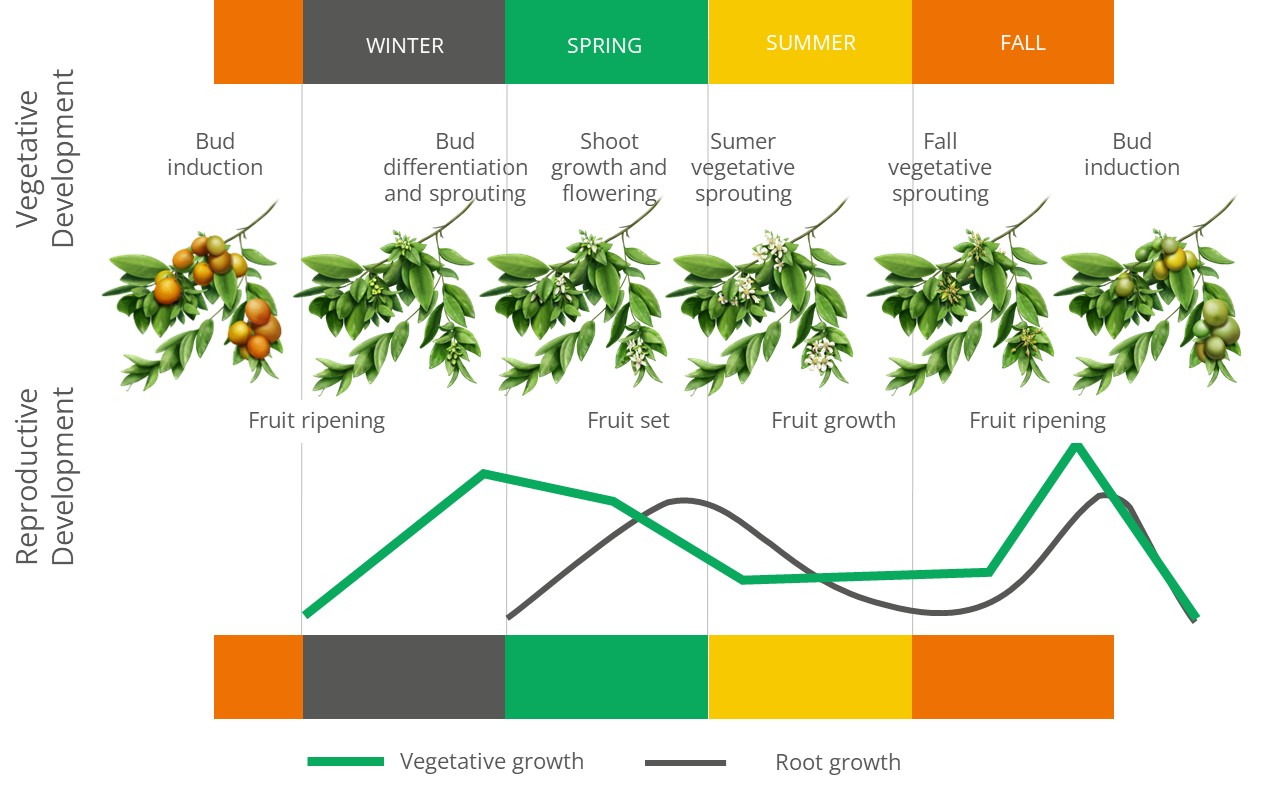
Effective nutrition begins with understanding citrus growth cycles. Citrus trees move through distinct physiological stages, including bud induction, bud differentiation, flowering, fruit set, fruit development, and post-harvest recovery. Each stage places different nutrient demands on the tree.
Recognizing these changing requirements is critical. A one-size-fits-all fertilizer approach often fails to support the tree during key physiological transitions, particularly around flowering and early fruit development.
A Targeted Nutritional Solution
The solution presented is based on determining nutrient requirements per growth stage rather than relying solely on a conventional annual fertilizer program. While standard fertilization remains the base, targeted supplementation is introduced to support critical stages in the citrus growth cycle.
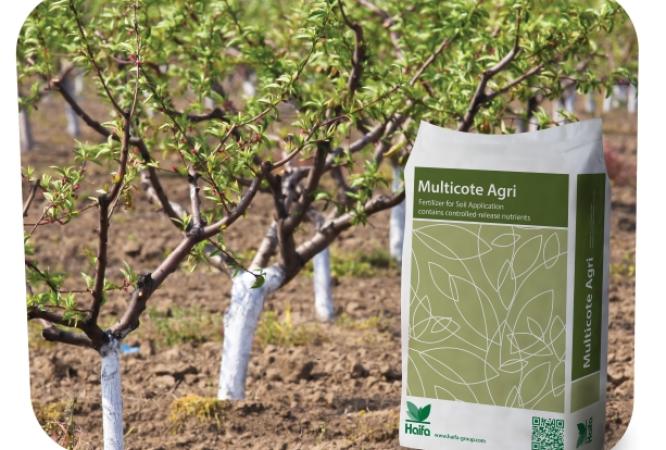
The program aligns nutrition with particular growth stages, combining Multicote™ Agri as a base, and complementing it with foliar application of nutrients and biostimulants. This approach ensures that nitrogen (N), phosphorus (P), potassium (K), and micronutrients are available when the tree needs them most.
Orchard‑Specific Nutrition
Background NPK nutrition:
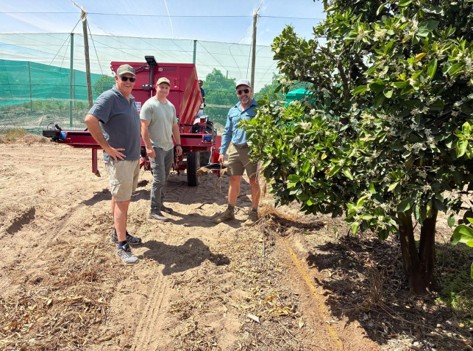
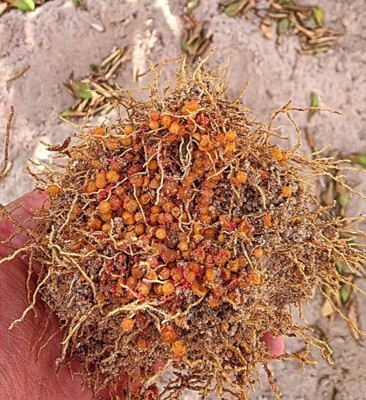
| Young orchards | Multicote™ Agri Juvenile (8) 19-6-10+B+Zn | 250–500 g per tree |
| Bearing orchards | Multicote™ Agri "Oscar" (8) 19-6-23 | 600–1,200 g per tree |
Application rates are set according to tree age and performance.
| 
|
To support physiological processes, encourage nutrient uptake at periods of peak demand and strengthen the tree, this mineral nutrition is supplemented by foliar applications:
 |  |  |
| Flowering (BBCH 49-56) | Fruit set (BBCH 69) | Fruit development (BBCH 72+) |
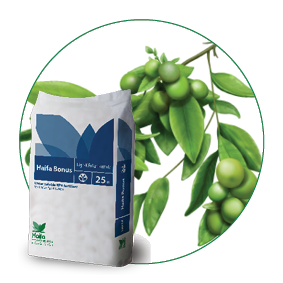
| HaifaStim™ Force 2.5 L/ha | HaifaStim™ Force 2.5 L/ha | Haifa Bonus™ 1-3% |
Measurable Results in Commercial Orchards
The outcomes of this nutrition strategy have been consistent and measurable. Orchards showed
- Improved uniformity of flowering
- Stronger vegetative growth
- Elimination of yellowing during winter dormancy.
- Trees developed greater canopy volume, supporting higher fruit loads.
Yield improvements averaged an additional 5 tons per hectare.
Fruit size increased by 5–6 mm, translating directly into more cartons per hectare and higher market returns.
The strategy also reduced the impact of alternate bearing, contributing to more stable year‑to‑year production
Varietal performance improvements were particularly notable:
- Tango orchards achieved consistent yields of 60–65 t/ha.
- Navel orchards increased from approximately 32 t/ha to 60 t/ha.
- Nules orchards improved from low‑20 t/ha yields to 44 t/ha, and subsequently to 50 t/ha.
 | 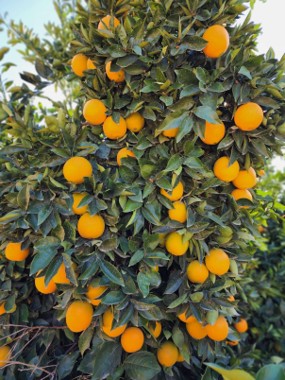 |
Strong Economic Returns
Beyond agronomic gains, the program demonstrated clear economic benefits. An average yield increase of 5 tons per hectare translated into an additional USD 5–10 per tree, depending on variety and tree density. Improved fruit size further increased revenue through higher pack‑out.
With an additional MCA cost of approximately USD 1.17 per tree, net income gains ranged from USD 4.02 to USD 9.58 per tree, depending on cultivar.
Net return on investment (ROI) values ranged from 3 to 8, confirming the program’s profitability.
Conclusion
Aligning citrus nutrition with crop physiology and orchard variability delivers tangible results. By moving beyond conventional fertilizer programs and adopting a growth‑stage‑specific approach, growers can achieve
- Higher yields
- Improved fruit size
- Greater orchard uniformity
- Strong economic returns
The South African experience demonstrates that targeted nutrition is not just an agronomic improvement – it is a strategic investment in orchard performance.
Report by Gerrit Burger, Haifa RSA agronomist