

Carbon dioxide (CO₂) is a fundamental component of plant photosynthesis, directly driving the conversion of light energy into plant biomass. In greenhouse environments – where light, water, and nutrients are meticulously controlled – CO₂ often becomes a limiting factor. Enriching the greenhouse atmosphere with CO₂ enables crops to fully realize their photosynthetic potential.
Numerous studies and commercial trials have shown that CO₂ enrichment accelerates leaf development, enhances biomass production, supports earlier fruiting, and significantly increases yields – ultimately improving growers’ profitability. These benefits are particularly pronounced in intensive production systems, where maximizing output per unit area is essential.
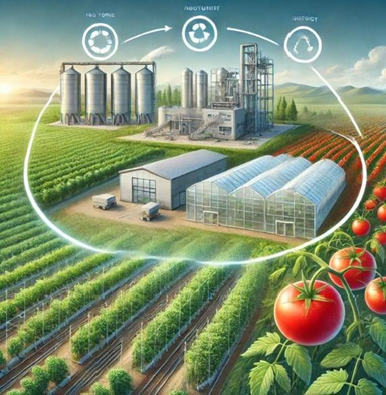
In recent years, Haifa Group has conducted trials in collaboration with Ramat Negev R&D center to evaluate the effects of CO₂ enrichment on local crops and to establish practical application protocols. This work is carried out in parallel with the construction of the Blumonia plant at the Haifa Negev production site, where CO₂ will be generated as a by-product of ammonia production.
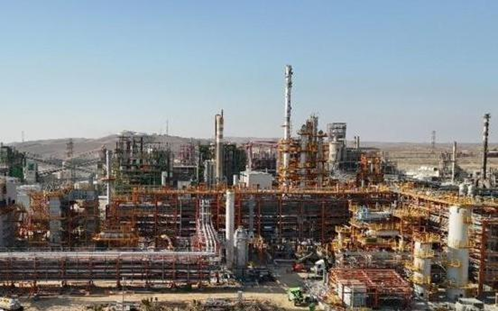 | 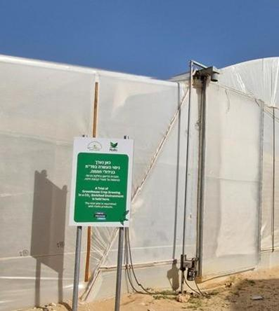 |
The Blumonia plant | The trial site |
Trials on cherry tomatoes demonstrated that harvesting could be initiated one month earlier, with yield increases of 20–25% under CO₂-enriched conditions. This is especially relevant given that approximately 40% of Israel’s cherry tomato production is concentrated in the Ramat Negev region, where intensive protected cultivation is essential for a year-round supply.
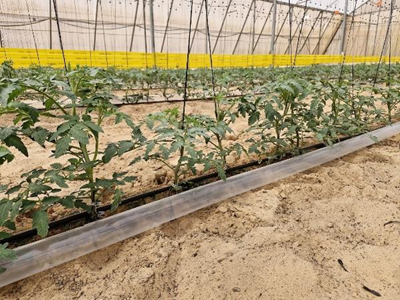 | 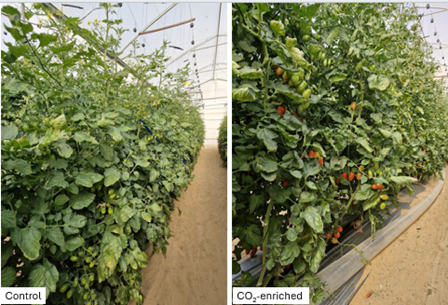 |
CO2 distribution | Yield results |
Beyond productivity gains, CO₂ enrichment supports sustainability goals. When industrial CO₂ emissions from fertilizer production are captured and redirected for agricultural use, they become a valuable resource rather than an environmental burden. This approach exemplifies circular economy and agriculture principles—closing resource loops, reducing emissions, and enabling more sustainable food production while protecting the environment."
 |


