
Agriculture is entering an era of growing uncertainty. Climate change is intensifying droughts, heat waves, erratic rainfall, and soil salinization, while at the same time global demand for food continues to rise. Farmers are therefore required to produce more food, of higher quality, with fewer resources and under increasingly unstable environmental conditions.
Under these circumstances, traditional fertilization practices based on fixed schedules are no longer sufficient. Agriculture is increasingly turning toward advanced fertilization technologies, precision application methods, and digital decision-support tools that help crops withstand environmental stress while maintaining productivity.
These innovations are not only about protecting crops from climate risks. They are also essential for optimizing yields and stabilizing food production, helping agriculture meet the nutritional needs of a growing global population despite increasing resource constraints.
How Does Climate Change Impact Agriculture?
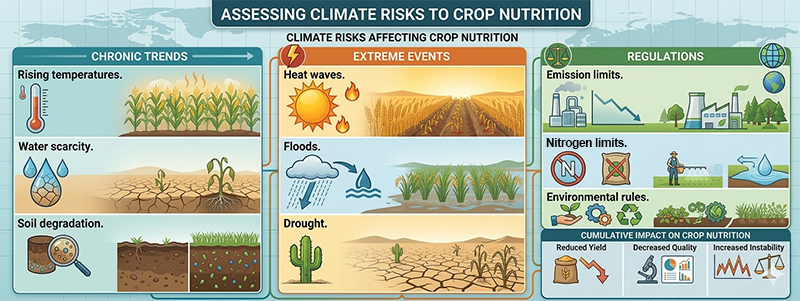
Agriculture today faces a combination of chronic, acute, and regulatory risks.
Chronic risks reflect long-term environmental trends such as rising temperatures, declining water availability, and gradual depletion of natural resources. These persistent pressures affect soil fertility, water quality, and crop productivity across large agricultural regions.
At the same time, growers increasingly face acute risks – sudden and often unpredictable events such as heat waves, floods, or severe droughts. Although temporary, these events can cause immediate disruptions to plant growth and nutrient availability.
In addition, environmental regulations and carbon-related policies are becoming stricter, requiring fertilization strategies that support both productivity and environmental sustainability.
How Can Fertilization Adapt to Climate Variability?
Climate variability strongly affects how nutrients behave in the soil. Changes in rainfall, soil moisture, and temperature can increase nutrient losses and reduce fertilizer efficiency.
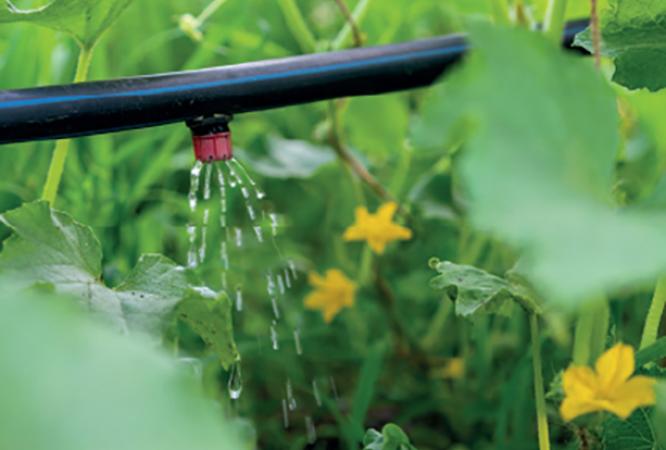
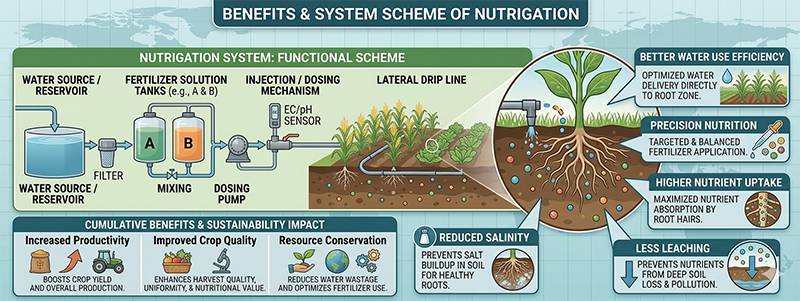
One of the most important developments addressing this challenge is the growing adoption of drip irrigation systems, which deliver water directly to the root zone and significantly improve water-use efficiency.
When drip irrigation is combined with fertigation (Nutrigation™), nutrients are supplied together with irrigation water in small, frequent doses. This approach maintains nutrients in the active root zone, improves nutrient uptake efficiency, and reduces losses through leaching or volatilization. It also helps prevent excessive salt accumulation in the soil.
Changes in climatic patterns and unpredictable weather events also affect plant development and the timing of growth processes – and consequently the crop’s nutritional requirements. Nutrigation™ is inherently flexible, allowing fertilization programs to be adjusted during the season to match the crop’s actual needs. For example, if fruit production is reduced due to poor fruit set following a heat wave, fertilizer application rates can be adjusted accordingly, aligning nutrient supply with the reduced yield potential and preventing unnecessary inputs.
Fully water-soluble fertilizers have been specifically developed for Nutrigation™ systems. For example, Haifa’s high-purity fertilizers such as Poly-Feed™, Multi-K™, and Haifa Cal™ are designed to dissolve completely and enable precise nutrient delivery through irrigation systems.
Why Are Controlled-Release Fertilizers Becoming More Important?
Another technology that improves nutrient efficiency under variable environmental conditions is the use of controlled-release fertilizers (CRFs).
These fertilizers release nutrients gradually according, to soil temperature. This controlled nutrient supply synchronizes fertilizer availability with plant demand, reducing losses caused by heavy rainfall or floods. CRFs are particularly valuable in where frequent fertigation is not feasible.
Examples include coated fertilizers such as Multicote™ Agri, which demonstrate how advanced coating technologies can significantly improve nutrient use efficiency while reducing environmental impact.
Can Biostimulants Help Crops Cope with Climate Stress?
In recent years, biostimulants have emerged as an important tool for managing abiotic stress such as heat, drought, and salinity.
These products support plant metabolism, improve root development, and enhance nutrient uptake efficiency. As a result, plants are better able to maintain growth and recover from stress events.
Many agricultural technology companies are investing in this field. For example, the HaifaStim™ range focuses on improving plant resilience while supporting efficient nutrient use.
What Role Do Digital Tools and AI Play in Fertilization?
As agricultural systems become more complex, data-driven nutrient management is becoming essential.
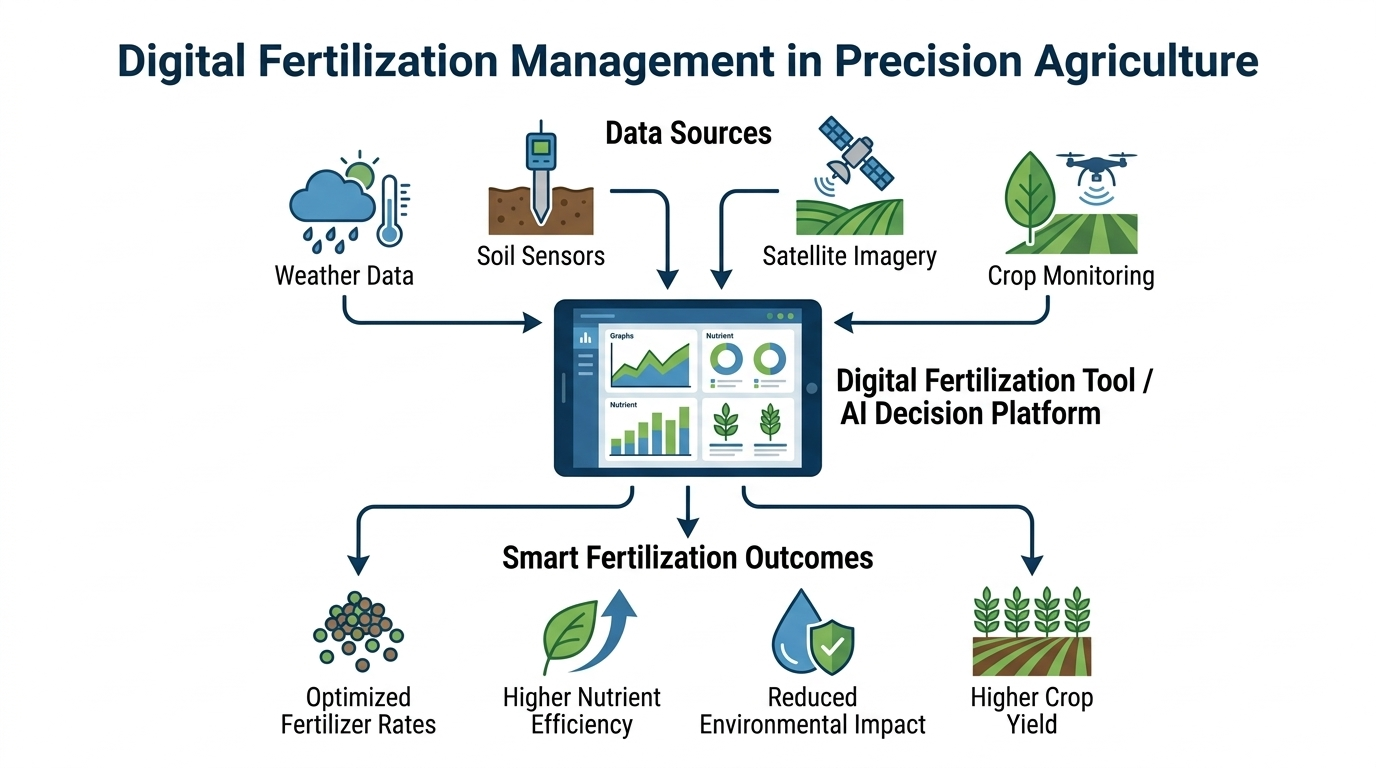
Digital fertilization calculators such as NnutriNet™ already allow growers to design fertilization programs based on yield targets, crop growth stage, soil conditions, and environmental factors. These tools translate agronomic data into practical fertilization plans.
In the near future, fertilization management will increasingly rely on artificial intelligence and real-time data analysis. By integrating weather forecasts, soil sensors, crop monitoring, and satellite imagery, AI-based systems will be able to dynamically adjust fertilization strategies throughout the growing season.
Toward Climate-Resilient and Productive Agriculture
Climate change is forcing agriculture to rethink fertilization practices. At the same time, global food demand continues to rise.
Innovative fertilization technologies – including precision fertigation, controlled-release fertilizers, biostimulants, and digital decision-support tools – are becoming essential components of modern agriculture.
By improving nutrient use efficiency and strengthening crop resilience, these approaches help farmers maintain high and stable yields, contributing to the long-term goal of global food security in a resource-constrained world.