
Nitrogen is one of the most important nutrients in crop production. It is the primary nutrient responsible for plant growth and a key component of chlorophyll, amino acids, proteins, enzymes, and DNA.
Typically, harvested yields contain about 1–3% nitrogen on a dry matter basis in most crops, with lower values in cereals (~1–2%) and higher values in protein‑rich legumes (~4–6%). As a result, crops remove large amounts of nitrogen from the soil each season, and natural soil reserves are often insufficient to sustain high productivity in intensive agriculture. This continuous nitrogen export further depletes soil reserves, making nitrogen fertilization a central component of modern crop nutrition programs.
In modern precision agriculture systems, understanding nitrogen behavior in the soil and inside the plant is fundamental for efficient fertilization management, better climate-resilience, improved nutrient use efficiency, and sustainable crop production.
What Are the Main Types of Nitrogen Fertilizer?
The main types of nitrogen fertilizer are nitrate fertilizers, ammonium fertilizers, urea fertilizers, organic nitrogen sources and mixed nitrogen fertilizers – carrying nitrogen in more than one form, e.g., ammonium nitrate fertilizer and various NPK blends. Special group of nitrogen fertilizers are products that release nitrogen over time – controlled-release or stabilized nitrogen fertilizers. These fertilizer types differ in how quickly nitrogen becomes available to plants, how mobile they are in soil, how they affect root-zone pH, and how easily nitrogen can be lost through leaching, volatilization, or denitrification.

List of nitrogen fertilizers and the form of nitrogen they provide
| Fertilizer | Main Nitrogen Form(s) Supplied | Typical N Content (%) | Notes |
| Urea fertilizer | Amide (urea-N) | 46 | Highest N concentration among solid fertilizers; converts to ammonium in soil |
| Ammonium sulfate | Ammonium (NH4+) | 21 | Also supplies sulfur |
| Ammonium nitrate fertilizer | Ammonium + nitrate | 33–34 | Fast and balanced nitrogen availability |
| Calcium ammonium nitrate (CAN) | Ammonium + nitrate | 26–28 | Contains calcium and/or magnesium; widely used in field crops |
| Calcium nitrate | Nitrate (NO3-) | 15–16 | Also supplies calcium; ideal for fertigation and greenhouse crops |
| Potassium nitrate | Nitrate (NO3-) | 13 | Also supplies potassium; chloride-free |
| Sodium nitrate | Nitrate (NO3-) | 16 | Fast-acting, but might interfere with uptake of essential cations and less suitable for salinity sensitive crops |
| Monoammonium phosphate (MAP) | Ammonium (NH4+) | 11–12 | Also supplies phosphorus |
| Diammonium phosphate (DAP) | Ammonium (NH4+) | 18 | High phosphorus content |
| UAN solution (urea ammonium nitrate) | Urea + ammonium + nitrate | 28–32 | Liquid fertilizer containing all three N forms |
| Ammonia / anhydrous ammonia | Ammonia → ammonium in soil | 82 | Concentrated gaseous fertilizer injected into soil |
| Ammonium chloride | Ammonium (NH4+) | 25–26 | Contains chloride; less suitable for chloride-sensitive crops |
| Magnesium nitrate | Nitrate (NO3-) | 10–11 | Also supplies magnesium |
Controlled-release nitrogen fertilizers | Urea, ammonium and/or nitrate | Varies | Designed for slow, controlled nitrogen availability |
Organic fertilizers (manure, compost, etc.) | Organic N | Varies | Nitrogen availability depends on microbial mineralization |
How Do Plants Uptake Nitrogen?
Plant roots absorb nitrogen dissolved in the soil solution. Nitrate is taken up together with water through mass flow, while ammonium uptake is influenced more strongly by direct root activity and soil conditions.
Once inside the plant, nitrogen is transported to growing tissues where it is incorporated into amino acids and proteins. The energy required for nitrogen assimilation differs between nitrogen forms, affecting crop response under different environmental conditions.
Ammonium Nitrogen | |
Ammonium nitrogen can be absorbed directly by roots or converted by soil bacteria into nitrate through nitrification. This process is faster in warm, well-aerated soils. Ammonium is positively charged, allowing it to bind to soil particles. This reduces leaching losses compared to nitrate nitrogen. Plants can assimilate ammonium rapidly because it is already in a reduced form, requiring less metabolic energy than nitrate assimilation. However, excessive ammonium nutrition may create several problems. High ammonium concentrations near the roots can become toxic, especially under low light conditions, poor aeration, or cool temperatures. Excess ammonium may suppress the uptake of calcium, magnesium, and potassium because these nutrients compete for uptake sites on the root surface. Ammonium-based fertilizers include ammonium sulfate, monoammonium phosphate (MAP), diammonium phosphate (DAP), and fertilizers containing ammonium nitrate combinations. | 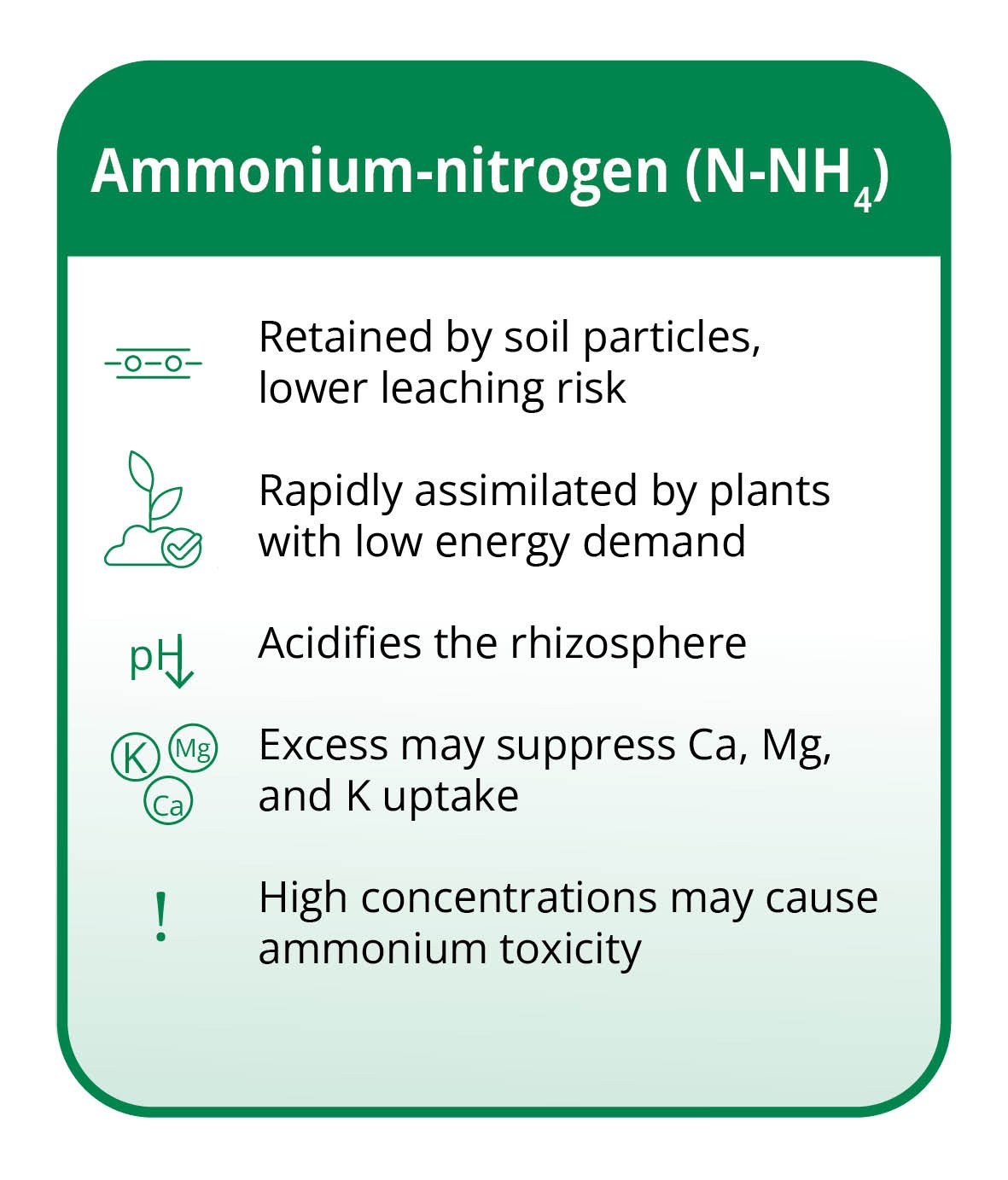 |
Nitrate Nitrogen | |
Nitrate nitrogen is highly soluble and immediately available for plant uptake. However, because nitrate is negatively charged, it is not retained by soil particles and can move easily with irrigation water, increasing the risk of leaching. Nitrate is easily absorbed and transported rapidly throughout the plant via the transpiration stream. Unlike ammonium, nitrate uptake usually has a synergistic effect on the absorption of positively charged nutrients such as potassium, calcium, and magnesium. This interaction contributes to balanced nutrition and supports fruit quality, firmness, and shelf life. Nitrate nutrition generally promotes vigorous root development and stable vegetative growth. However, nitrate is highly mobile in soil and may be lost by leaching, especially in sandy soils or under excessive irrigation. Efficient fertigation management and split applications are therefore important to improve Nitrogen Use Efficiency (NUE). Nitrate is supplied by fertilizers such as potassium nitrate, calcium nitrate, and magnesium nitrate. Many water-soluble NPK fertilizers contain nitrate nitrogen as a major nitrogen source. Potassium nitrate fertilizers such as Haifa Multi-K™ and calcium nitrate fertilizers such as Haifa Cal™ are common nitrate-based sources used in fertigation, greenhouse production, hydroponics, and high-value crops. | 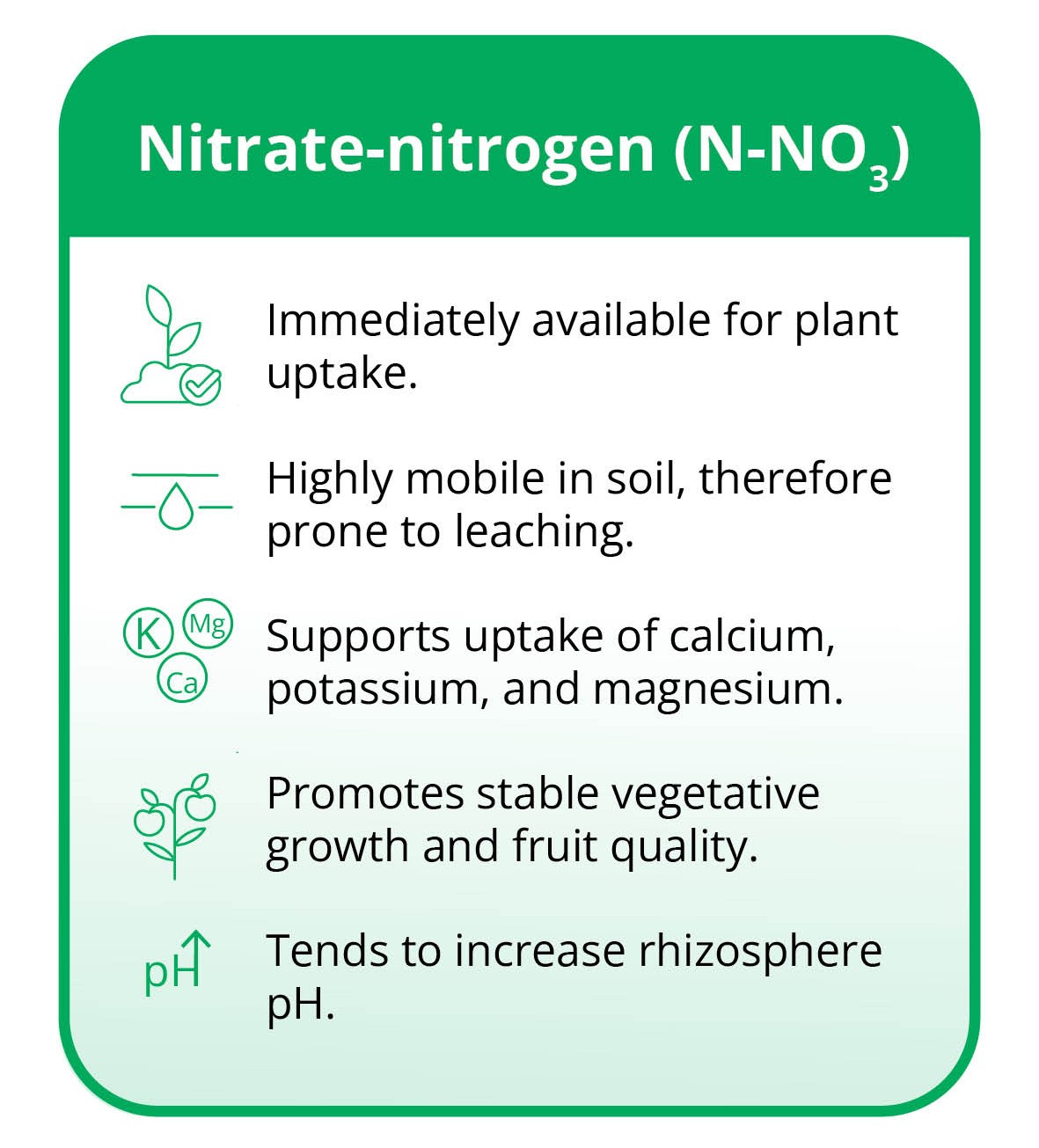 |
Amid Nitrogen (Urea fertilizer) | |
Urea is the most widely used nitrogen fertilizer worldwide because of its high nitrogen concentration and relatively low cost. Plants absorb only limited amounts of urea directly. In most agricultural soils, urea must first be converted into ammonium before plants can use it effectively. This conversion depends strongly on soil temperature, moisture, and microbial activity. Under cool conditions, urea conversion slows down significantly, delaying nitrogen availability. Another challenge with urea is ammonia volatilization. When surface-applied without incorporation or irrigation, a portion of the nitrogen can be lost to the atmosphere, particularly under alkaline soil conditions and high temperatures. Under such conditions, nitrogen losses can reach 30% or more of the applied nitrogen. | 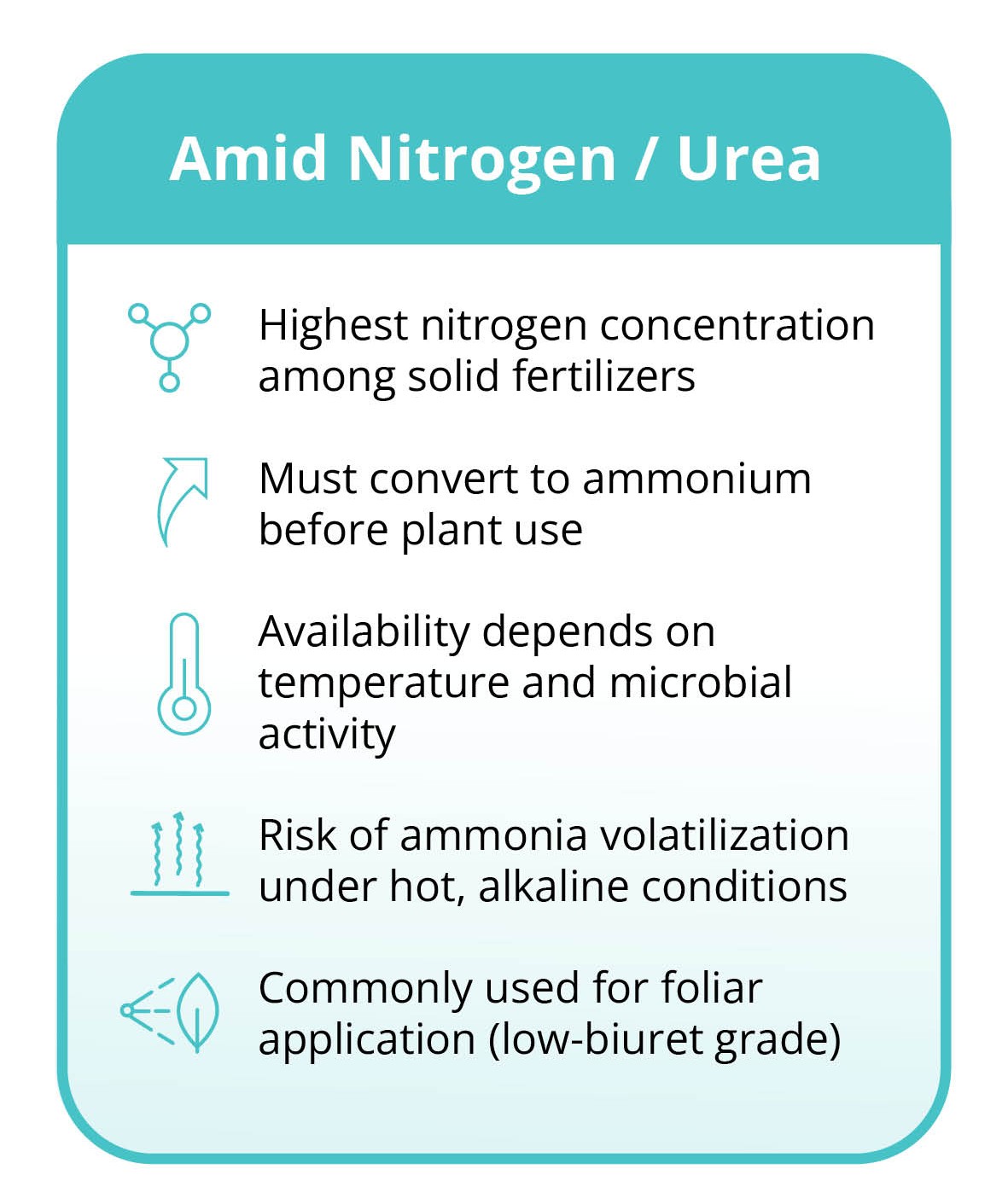 |
Organic nitrogen | |
| Plants obtain nitrogen mainly from mineral fertilizers, but also from organic sources such as manures, composts, and organic fertilizers. Organic sources contribute valuable organic matter and support soil structure, microbial activity, and long-term soil fertility. However, their nitrogen availability depends strongly on microbial mineralization, making nitrogen release slower and less predictable compared to mineral fertilizers. | 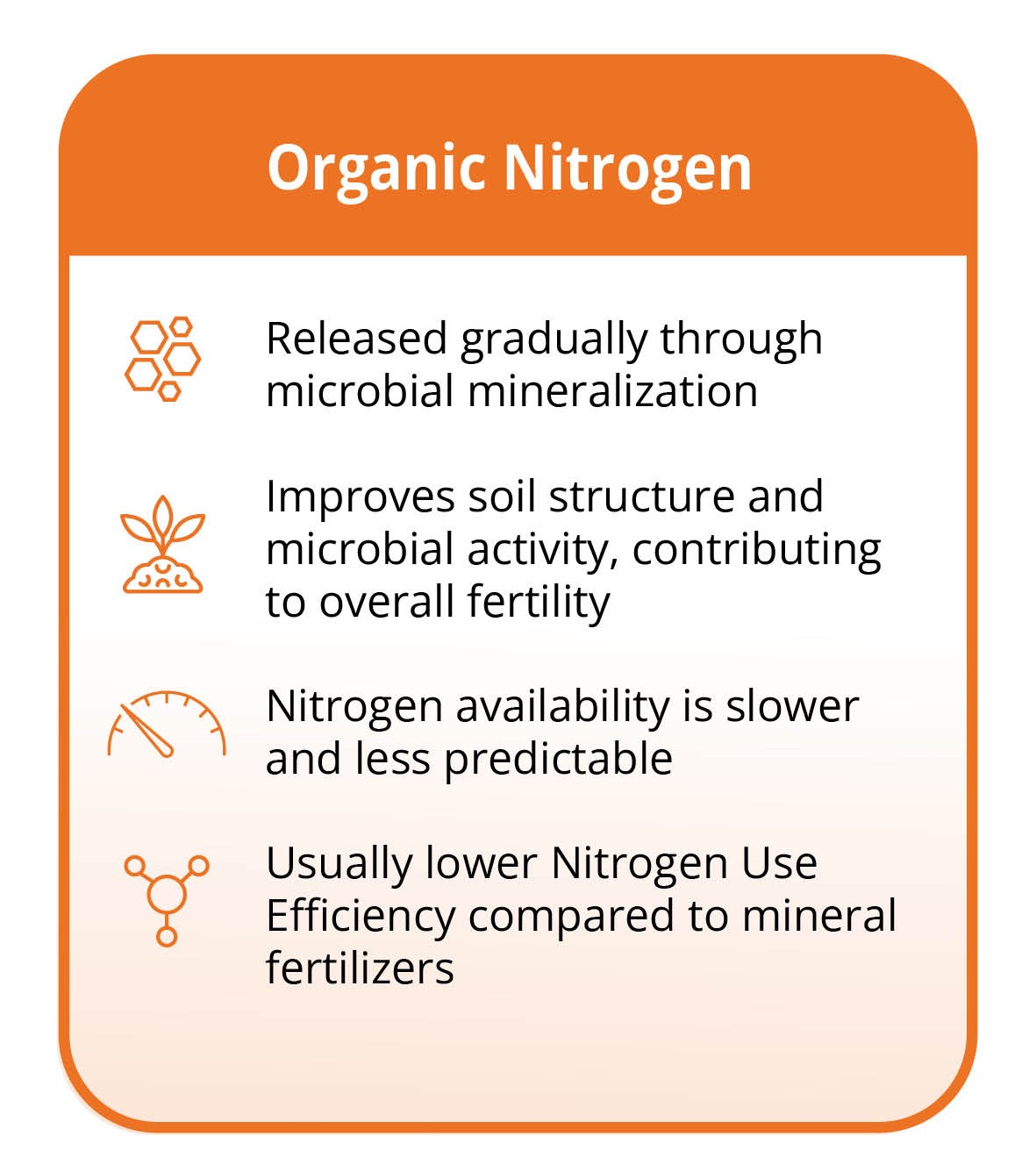 |
Nitrogen Form and Root-Zone pH
Nitrogen fertilizers strongly influence root-zone pH, which in turn affects nutrient availability.
Ammonium uptake by plants is accompanied by the release of hydrogen ions, leading to acidification of the rhizosphere. This can improve nutrient availability in alkaline soils, but excessive acidification may negatively affect root health and nutrient balance.
Nitrate uptake has the opposite effect. Plants release hydroxyl or bicarbonate ions, increasing rhizosphere pH. In hydroponics and soilless systems, nitrogen fertilization usually relies heavily on nitrate, often leading to a gradual increase in nutrient solution pH that must be balanced through acid injection or careful nutrient management.
Balanced fertilization programs often combine nitrate and ammonium forms to maintain stable root-zone conditions and optimize nutrient uptake.
Precision Agriculture Guidelines for Choosing Nitrogen Forms
The ideal nitrogen form depends on crop type, soil conditions, climate, and production system.
- In warm, well-aerated soils, mixed nitrate-ammonium nutrition often performs best.
- In cold soils, nitrate nutrition is generally more reliable because nitrification slows down.
- In alkaline soils, moderate ammonium use may help reduce root-zone pH.
- In fruiting crops, nitrate-based nutrition is often preferred during fruit development because it supports calcium and potassium uptake.
Controlled-release fertilizers and fertigation programs can help synchronize nitrogen availability with crop demand and improve nitrogen use efficiency.
Nitrogen Management in Soilless Culture
In hydroponics and other soilless systems, nitrate is usually the dominant nitrogen form. Excess ammonium may quickly accumulate to toxic levels because the buffering capacity of the substrate is limited.
Most soilless crops perform well when ammonium represents approximately 5–15% of total nitrogen, while nitrate supplies the remainder. This balance helps stabilize pH while minimizing ammonium stress.
Hydroponic fertilizers such as Multi-K™ Reci, Haifa GrowClean™ and Poly-Feed™ GG are commonly used in these systems because they provide precise nutritional control.
Nitrogen Fertilizers for Foliar Application
Foliar nitrogen application is often used to correct deficiencies rapidly or support crops during periods of high demand.
Urea is widely used for foliar spraying because of its high solubility and relatively low salt index. However, foliar-grade urea must contain very low levels of biuret, a toxic impurity formed during urea manufacturing. Excess biuret may cause leaf burn and crop damage, especially in sensitive crops such as citrus.
Potassium-nitrate based fertilizers are most suitable for foliar application, combining nitrogen and potassium supply in a highly soluble form. Foliar-grade products such as Haifa Bonus™ and Poly-Feed™ Foliar are commonly used during fruit filling and quality-development stages.
Summary
Choosing the right nitrogen form is essential for efficient crop nutrition and optimal plant performance. Nitrate, ammonium, and urea each offer specific advantages and limitations depending on soil conditions, climate, crop stage, and production system. For these reasons, growers should consider not only the total nitrogen content of fertilizer, but also the balance between the different nitrogen forms it supplies.
Understanding how nitrogen forms behave in the soil and inside the plant helps growers improve nutrient uptake, maintain balanced root-zone conditions, reduce nitrogen losses, and maximize yield and quality. Combining the appropriate nitrogen source with precise fertigation and crop management practices is a key component of Precision Agriculture and climate-resilient agriculture systems.